








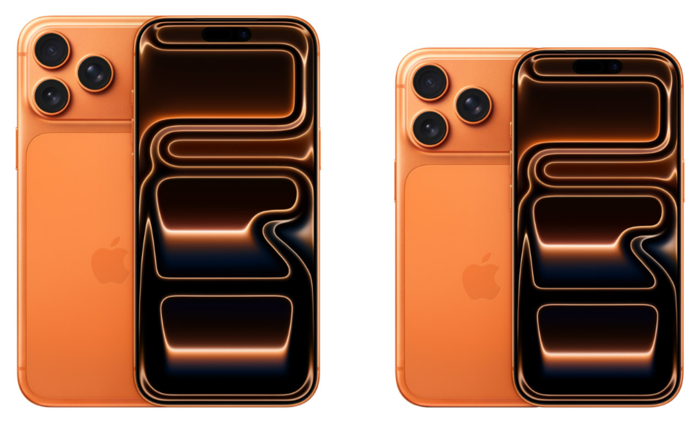
South Korea regained momentum in the small and medium-sized OLED market last year, marking its first market share rebound since competition with Chinese display makers intensified, according to industry analysis.
Data released on May 11 by the Korea Display Industry Association showed that Samsung Display accounted for 44.6% of the global small and medium OLED market by revenue in 2024, while LG Display recorded a 19.4% share.
The figures represent increases of 1.3 percentage points and 0.4 percentage points, respectively, compared with the previous year.
The combined market share of Samsung Display and LG Display stood at 85.5% in 2020 but fell below 80% in 2022 and below 70% in 2023. After dropping to 62.3% in 2024, the Korean companies achieved their first rebound in market share.
The recovery is considered significant because it marks the first turnaround for Korea's display industry since Chinese companies emerged as major competitors in the OLED sector.
Among Chinese manufacturers, BOE held a 14% market share, followed by Visionox at 5.5% and CSOT at 5.1%, bringing the combined share of Chinese firms to 35.9%.
That marked the first decline for Chinese companies after their collective market share reached 37% in 2024.

Small and medium-sized OLED panels refer to displays used in smartphones, tablets, and laptops. From a technical standpoint, they are produced using a fine metal mask (FMM) process, where organic materials are deposited to form the display structure. Among these, the smartphone segment holds the greatest influence, with OLED penetration exceeding 70% of sales on a revenue basis and accounting for the largest share of the market.
Compared with large-sized displays such as TVs and monitors--where liquid crystal display (LCD) panels still account for more than 90% of the market--the small and medium OLED segment is both larger in scale and far more competitive, particularly due to intense rivalry with Chinese manufacturers. As a result, market share in this segment is widely regarded as a key indicator of shifts in the global display industry landscape.
The recent rebound in South Korea's market share is interpreted as evidence of its technological edge in the premium segment of the display industry. In particular, within high-end products, China's BOE encountered technical difficulties in producing panels for Apple's iPhone 17 series, leading to a suspension of mass production, while Samsung Display absorbed the resulting supply volume.
In addition, Japan Display Inc. (JDI) exited its OLED supply business for the Apple Watch in the second half of last year, and LG Display took over the entire production volume previously handled by the Japanese firm, further contributing to the recovery of Korean companies.
Looking ahead, the trend is expected to continue this year as the upcoming iPhone 18 series in the second half is anticipated to consist only of high-end models, including Pro, Pro Max, and a foldable iPhone. Industry expectations suggest that Korean display makers will supply the panels in full.
A display industry official commented, “China expanded its presence in the mid- to low-end OLED segment by leveraging its domestic smartphone market, but that strategy is reaching its limits.” The official added, “To further increase its market share, China would need to enter the high-end segment. However, Korean companies are maintaining their lead in this space through technological competitiveness, which is leading to a plateau in China's share growth.”
