






Excessive Domestic Regulations Applied
Services Provided in 51 Countries Overseas
“Smart TV Ecosystem Weakened”

LG Electronics Inc. has decided not to launch a global service in South Korea, which it introduced ahead of major sports events such as the World Cup.
LG Electronics launched 'LG Sports Playbook' on the global market, which provides real-time sports data and precise analysis statistics through its smart TV platform. It will be sequentially applied to 51 countries and regions around the world, including North America, Europe, Latin America, and Asia.
South Korea was completely excluded from the list of launching countries. An official from LG Electronics said, “We strategically judge based on market demand and situations to decide whether to launch products or services,” and added, “We have no plans to launch Sports Playbook in South Korea.”
Regarding the background of the failed launch in South Korea, analysis suggests it is due to the unique and powerful speculative regulation environment in South Korea.
'LG Sports Playbook' provides real-time scores, match schedules, and league rankings, as well as visualized statistics between players and teams through the TV screen. It is designed so that users can intuitively track real-time data changes within a large-screen TV without utilizing a 'second screen' such as a separate smartphone or tablet.
'Live Match Updates,' one of the core features provided by 'Sports Playbook,' displays real-time scores, match schedules, and league rankings on the screen. In addition, through separate functions, it provides comparisons between teams and major match data through an analytical dashboard that clearly and visually shows team or player performance and trends, and displays an easy-to-understand tournament bracket and series progress so that users can grasp the postseason progress at a glance.
A lawyer at a large law firm said, “With this method, domestic speculative review regulations may judge that precise real-time data has the potential to be abused as a monitoring screen by illegal private live betting (gambling placing money during a match) operators or users,” and added, “Depending on the UI or UX, it could also face criticism that it 'stimulates viewers' gambling spirit.'”
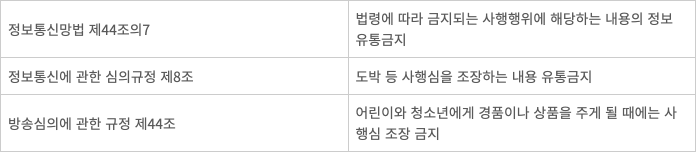
According to the Act on Promotion of Information and Communications Network Utilization and Information Protection and the regulations of the Korea Communications Standards Commission, the online distribution of 'information that is feared to abnormally encourage gambling spirits or aid and abet illegal gambling' is completely prohibited in South Korea. This means that if a company launches a service for the purpose of providing information, it could accidentally cause a misunderstanding that it provided illegal gambling infrastructure.
The business model is also completely blocked in South Korea. South Korea completely prohibits all private sports betting and private gambling, except for the state-authorized 'Sports Toto.' Because the legal scope of betting utilizing sports data is very narrow in South Korea, monetization is virtually impossible. This means there is no incentive to proceed with the service while bearing the risk of speculativeness.
While agreeing with the purpose of speculative regulations, voices in the industry say that the application of excessive regulations could block the evolution of the overall smart TV service ecosystem. They argue that ambiguous and broad standards make the scope of service approval unclear and induce companies to choose risk avoidance.
An official in the media industry said, “Real-time statistical visualization is a technological trend that major global broadcasting and platform companies competitively introduce to improve the viewing experience,” and added, “If a regulatory environment that fails to distinguish between providing legitimate information and encouraging speculativeness continues, global companies will have no choice but to repeatedly skip the South Korean market.”
It is pointed out that if services are fundamentally blocked solely based on the potential for abuse, it will consequently lead to a result where domestic consumers are alienated from a global-level viewing experience.