








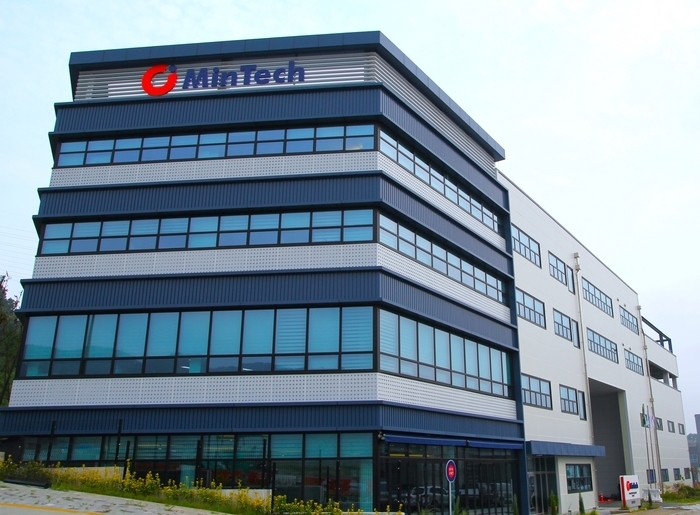
Mintech, a specialist in battery testing and diagnostics, is making a strategic pivot into the solid-state battery (SSB) materials market. Recognizing that the primary bottlenecks in mass-producing solid-state batteries lie in material and process challenges, the company plans to leverage its proprietary testing data and diagnostic expertise to bridge the gap in material development.
According to industry sources on the 7th, Mintech is moving forward with the establishment of a dedicated subsidiary this month focused exclusively on solid-state battery materials.
The new entity will operate independently from Mintech's existing diagnostics business, focusing on the R&D and mass production of next-generation solid-state materials. The company aims to create an integrated ecosystem that encompasses everything from material supply to cell validation and process analysis.
Mintech is also pursuing joint R&D and validation projects with prominent South Korean material leaders, including “Company P.” Through this “Open Innovation” model, Mintech intends to secure the technical readiness necessary for large-scale production.
Bridging the 'Valley of Death' in Mass Production
Solid-state batteries, which utilize a solid electrolyte instead of a liquid one, are hailed as the next-generation successor to lithium-ion batteries due to their superior energy density and significantly lower fire risk.
However, mass production remains a daunting challenge. Sulfide-based solid-state batteries--a leading candidate in the field--are extremely sensitive to moisture. They require a much lower dew point environment than traditional manufacturing lines; any moisture ingress can lead to the formation of hydrogen sulfide gas and severe corrosion. Furthermore, maintaining consistent interfacial contact between the cathode, solid electrolyte, and anode is difficult. While high pressure is required for uniform contact, implementing this within a continuous roll-to-roll process is a major engineering hurdle.
A Data-Driven Approach to Material Science
Mintech's entry into materials is backed by its proven track record of supplying process inspection equipment to pilot lines for major South Korean battery manufacturers. The company's core strength lies in its Electrochemical Impedance Spectroscopy (EIS) technology, which allows for the non-destructive diagnosis of a cell's internal state without disassembly.
By supplying inspection equipment, Mintech has accumulated a vast database of internal resistance changes and defect characteristics within solid-state cells. Through this data, the company concluded that existing material frameworks designed for lithium-ion batteries have inherent limits when applied to actual solid-state mass production.
Specifically, Mintech is targeting a new material approach that addresses dry-room limitations, high-pressure processing requirements, and overall processability. In a landscape where standardized manufacturing processes for SSBs have yet to be established, Mintech's strategy is to secure a “production-ready” material system based on its deep analytical capabilities.
Integrating Testing, Process, and Materials
While major conglomerates and specialized material firms are currently conducting SSB research, Mintech is the first to approach the sector by integrating diagnostics and process expertise with material development. The company expects this synergy to create a unique business model that links testing, process optimization, and material supply.
To support this vision, Mintech has established a “Next-Generation Technology Center” in Daejeon and has begun operating a specialized dry room for solid-state battery trial production. The company plans to simultaneously advance cell fabrication and material validation to secure full-scale production capabilities.
