








South Korea is expanding its Manufacturing AI Transformation (M.AX) initiative beyond traditional factory settings into everyday industries such as food and services.
Building on a successful case at Sungsimdang, a famous bakery in Daejeon, where AI and robotics improved production efficiency by 20% in the making of its signature fried soboro bread, the government plans to extend AI factory systems across the food sector, including traditional liquor and pork dish production.
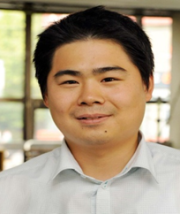
On May 27, Minister of Trade, Industry and Energy Kim Jung-kwan visited the Sungsimdang store inside Lotte Department Store in Daejeon and held a meeting with AI providers and officials from the Korea Robot Industry Promotion Agency to review on-site M.AX demonstrations.
Until now, the global AI competition in manufacturing has largely focused on high-tech and core industrial sectors. In September last year, the Ministry launched the “M.AX Alliance,” a public-private coalition that has since deployed 102 AI factories as of 2025. This year, the initiative is being expanded further into consumer-facing industries such as food and logistics to drive broader industrial transformation.
As part of the government's first-anniversary agenda, 10 “people-centered AI factory” projects were unveiled. One of the most notable examples is Sungsimdang, where AI-powered robots were introduced into repetitive production processes for fried soboro bread. The system automates dough handling, flipping, quality inspection based on size and frying level, and final packaging, with expected productivity gains of around 20%.
Lee Young-jin, CEO of Sungsimdang's parent company Rosso, said the system has significantly reduced workload burdens on staff and may be expanded to other branches after further refinement. AI solution provider Roilabs also said it plans to expand its business into food and beverage applications based on the success of the project.
Similar deployments are spreading across other food-related sectors. At the Andong Hee-Gok Brewery, a project is underway to apply AI and robotics to traditional soju fermentation processes by learning expert tacit knowledge to assist with mixing tasks in fermentation tanks, aiming to improve consistency and reduce worker fatigue.
Other examples include a system at Jangchung-dong King Jokbal & Bossam that supports defect detection and precise portion packaging, as well as logistics sorting robots deployed at a military smart logistics center.
Minister Kim said he observed that AI models used for semiconductor defect detection and those used for identifying defects in baked goods are technically very similar, highlighting strong potential for cross-industry application.
He added that the government will continue to expand support for applying M.AX beyond high-tech manufacturing into broader sectors of the economy, so that the public can directly experience the benefits of AI. The ministry also plans to significantly increase related pilot project funding in areas such as food, cosmetics, and hospitality.
