








Seoul to Use AI for Cardiovascular Emergency Response
119 Cardiac Arrest Recovery Rate Hits Record High
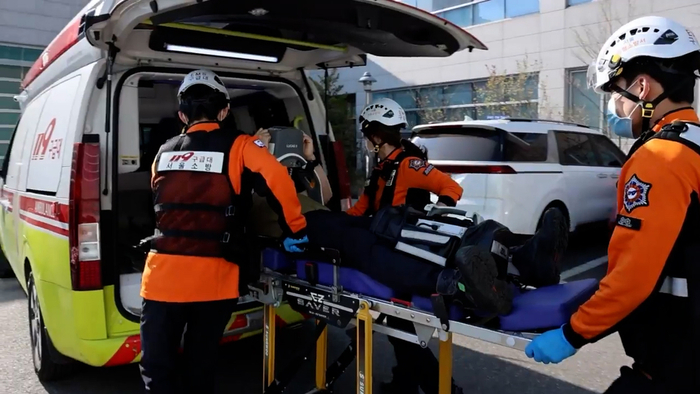
The Seoul Metropolitan Government will utilize an artificial intelligence (AI)-based smartphone application (app) in responding to cardiovascular emergency patients.
This is part of the 'AI-based Cardiovascular Emergency Response Advanced Pilot Project' being prepared this month by the Seoul Metropolitan Fire & Disaster Headquarters, along with the Emergency Medical Service Support Team and the Seoul National University Hospital Emergency Medical Research Laboratory. This decision aims to expand specialized treatment for cardiovascular emergency patients and use an AI electrocardiogram (ECG) reading app to grasp patient conditions more rapidly from the pre-hospital stage.
Seoul Fire will also advance the hospital selection and transport system tailored to the emergency patient's condition. As such, the system advancement and AI utilization are expected to help drive Seoul's spontaneous circulation recovery rate for cardiac arrest patients, which recorded an all-time high last year.
Seoul's cardiac arrest patient spontaneous circulation recovery rate has been rising every year, from 11.6% in 2023 and 12.0% in 2024 to 13.4% in 2025. This is 1.8 percentage points (p) higher than last year's national average of 11.6%.
This is the result of expanding paramedics with professional qualifications and operating special ambulance crews. Seoul Fire is simultaneously pushing for the expansion of professionally qualified paramedics and the vitalization of special ambulance crews to respond to the demand for emergency services for severe patients.
The percentage of professionally qualified paramedics with first-class emergency medical technician (EMT) or nursing licenses was raised from 82.5% last year to 85.3% currently, and it plans to expand this to over 90% in the future.
Paramedics with professional qualifications can activate as special ambulance crews after completing a special training course. The 48 special ambulance crews operating in Seoul provide specialized 119 emergency medical services through a wide range of emergency treatments, such as epinephrine administration.
In addition, expanding specialized treatments by special ambulance crews contributed to the rise in cardiac arrest spontaneous circulation recovery rates, as epinephrine administration for cardiac arrest patients reached 491 times last year, a 77.9% increase compared to 276 times the previous year.
Although emergency dispatches within Seoul have decreased, the number of severe emergency patient transports, such as cardiac arrest, is on an increasing trend, and the city plans to focus on emergency response. Last year, the number of transports for the four major severe conditions--cardiac arrest, severe trauma, cardiovascular, and cerebrovascular disease--was 19,088 cases, an increase of about 200 cases compared to the previous year.
Hong Young-keun, chief of the Seoul Metropolitan Fire & Disaster Headquarters, said, “The importance of rapid response to severe emergency patients is growing,” and added, “Seoul Fire will do its best to improve the quality of 119 emergency medical services that protect citizens' lives and enhance emergency response capabilities through the expansion of professional manpower and utilization of AI technology.”
