








As the electric vehicle (EV) battery sector emerges as a strategic national asset alongside semiconductors, industry experts and policymakers are stepping up calls for an overhauled tax incentive framework that would provide immediate financial relief to pre-revenue and loss-making manufacturers.
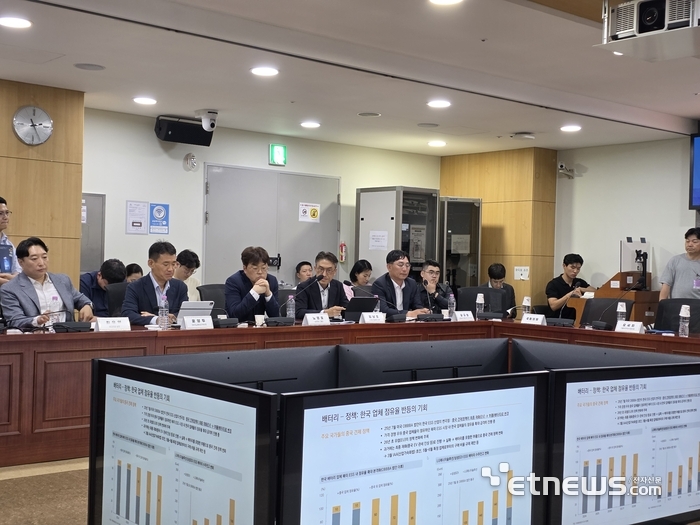
At a parliamentary forum co-hosted by lawmakers and the Korea Battery Industry Association (KBIA) on June 24, South Korea's leading battery cell makers -- LG Energy Solution, Samsung SDI and SK On -- along with major cathode producer EcoPro, gathered to press for urgent policy changes aimed at strengthening the country's supply chain.
Kim Chul-jung, head of the Strategic Industries Team at Mirae Asset Securities, said the battery market is rapidly expanding beyond electric vehicles into energy storage systems (ESS), artificial intelligence (AI) data centers, humanoid robotics, defense aerospace and eco-friendly maritime transport. Over the next decade, he said, batteries will become as ubiquitous and economically vital as microchips, serving as core hardware for autonomous mobility and physical AI.
The main challenge facing South Korean manufacturers, however, is the structural limitation of domestic tax incentives. Under current tax law, investment tax credits can only offset existing corporate income tax liabilities. That means startups and capital-intensive companies in long construction phases receive little to no immediate benefit before they turn profitable. Legal experts at the forum warned that simply carrying these credits forward to future tax years does little to ease the liquidity pressure created by massive upfront capital expenditures.
To address this, experts urged Seoul to benchmark Western models, including the Advanced Manufacturing Production Credit (AMPC) under the U.S. Inflation Reduction Act and Canada's Clean Technology Investment Tax Credit (CT ITC). They recommended introducing transferable credits in the near term, allowing companies to monetize unused incentives by selling them to profitable third parties, before eventually moving to a fully refundable tax credit model, or “Direct Pay,” that would provide cash refunds directly to companies based on production output or investment volume.
The KBIA echoed those concerns, stressing that because battery manufacturing is tied to national security, the government should simultaneously evaluate both direct-refund investment credits and production-based incentives.
The association also called on policymakers to subsidize domestic mineral refining investments and expand research and development funding for materials, components and equipment suppliers.
While acknowledging those demands, officials at the Ministry of Trade, Industry and Energy said that incorporating battery manufacturing directly into the country's production tax credit framework should remain the immediate legislative priority before debating more advanced monetization mechanisms such as transferability or direct refunds.
