








South Korean display equipment manufacturers are reaping significant benefits from Chinese panel maker CSOT's heavy investments in its 8.6-generation (8.6G) OLED production lines. While China's massive capital expenditure presents a lucrative lifeline for these suppliers, it is simultaneously fueling industry-wide concerns over an escalating, near-total dependence on the Chinese market.
According to ChinaBidding, a public bidding platform in China, CSOT recently selected a wave of major South Korean equipment vendors--including SFA, HIMS, Device, and HB Solution--as key suppliers for its 8.6G fab. SFA will supply atmospheric pressure laminators for the module process, while HIMS secures orders for mask tensioners and manual repair systems. Device is tapped for mask cleaners, and HB Solution will deliver advanced metrology and inspection systems, including spectroscopic ellipsometers and optical inspection tools.
These deals follow earlier wins by other prominent South Korean players. YAS, Avaco, and Viatron previously clinched contracts for evaporators, low-damage sputters, and thermal processing equipment, respectively. Additionally, LG Electronics' Production Engineering Research Institute (PRI) secured a contract to supply inkjet vacuum logistics equipment.
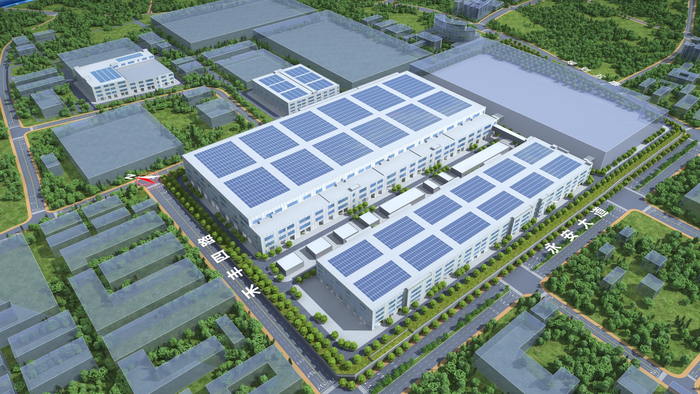
Since September last year, CSOT has been building an 8.6G OLED facility in Guangzhou with a target capacity of 22,500 glass substrates per month, pivoting heavily toward Inkjet Printing (IJP) technology. Unlike traditional OLED manufacturing, which vaporizes organic materials under a vacuum to deposit the emitting layer, IJP precisely sprays organic materials through nozzles to form pixels, much like a desktop printer.
While CSOT previously announced the late-2024 mass production of medical IT OLED panels using IJP at its 5.5G (T5) fab in Wuhan--largely relying on retrofitted equipment acquired from Japan's defunct JOLED--the 8.6G facility represents a greenfield investment built from scratch. This fresh buildup has triggered a massive wave of equipment procurement, injecting much-needed vitality into the South Korean supply chain.
For several domestic equipment makers, these large-scale orders arrived just in time to alleviate severe cash flow constraints. Typically, equipment vendors receive upfront down payments from panel manufacturers upon signing a contract. However, after prolonged droughts in new orders, smaller vendors with depleted cash reserves found it difficult to pre-finance the subcomponents and raw materials needed for production using just the standard down payments, forcing them to scramble for manufacturing capital.
Consequently, tapping into China's 8.6G capital expenditure has become a critical strategy for both growth and survival. Because 8.6G systems are substantially larger and more lucrative than older 6G equipment, and because China far outpaces South Korea in current fab expansion, domestic vendors have increasingly had to rely on the Chinese market as their primary revenue engine.
However, this structural shift leaves equipment makers highly vulnerable to geopolitical and macroeconomic risks. Data from the Korea Customs Service underscores this stark reality: from January to May this year, South Korea's display equipment exports totaled $259.39 million, with a staggering 89.6% ($232.39 million) bound for China. This follows last year's trend, where exports to China accounted for 90.8% ($885.69 million) of the $975.52 million total.
“With Chinese panel makers aggressively investing in new facilities backed by local government subsidies, South Korean equipment companies have little choice but to lean on China,” an industry insider noted. “With BOE, Visionox, and now CSOT rolling out consecutive 8.6G investments over the past two years, our structural dependence on the Chinese market has reached a critical high.”
