








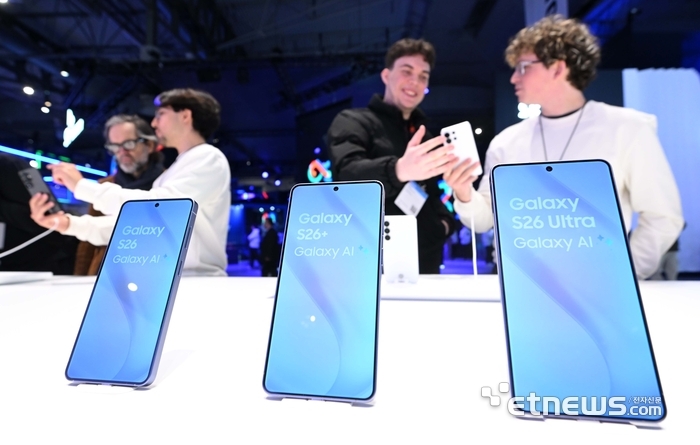
China's BOE Technology has failed in its bid to supply organic light-emitting diode (OLED) panels for Samsung Electronics' upcoming flagship smartphone, the tentatively named Galaxy S27. According to industry sources on June 30, the Chinese display giant's push to enter the Galaxy S27 supply chain has fallen through. An industry insider familiar with the matter confirmed that BOE has officially halted its Galaxy S27 OLED development project.
The decision comes amid reports that a recent visit to BOE by TM Roh, President and Head of the Mobile eXperience (MX) Business at Samsung Electronics, yielded no positive breakthroughs for the supply deal. BOE had invested significant resources in landing the contract, initiating a dedicated development project after receiving a Request for Information (RFI) from Samsung. However, internal deliberations within Samsung regarding the adoption of BOE's panels remained deeply divided. While a negative consensus had been building in recent weeks, BOE reportedly kept the project alive until Roh's visit to China on June 25, which ultimately sealed the project's cancellation.
The Galaxy S series represents Samsung's crown jewel in the mobile market, boasting annual sales of roughly 30 million units. As a premium flagship lineup, breaking into its supply chain carries immense symbolic weight. For BOE, securing a spot on the Galaxy S27 would have served as a definitive global stamp of approval for its display quality and technical competence.
While the exact reasons for the cancellation have not been officially disclosed, intense pushback from within Samsung Electronics and its affiliate Samsung Display is widely cited as the driving factor. Historically, Samsung Display has been the exclusive OLED supplier for the Galaxy S series. For Samsung Display, it was highly strategic to prevent its parent company and anchor client from adopting panels from BOE--a direct Chinese competitor.
Samsung Display currently commands the top spot in the global smartphone OLED market, supplying the lion's share of premium panels to tech giants like Apple and Samsung Electronics. According to market research firm Omdia, Samsung Display held a 44.6% revenue share in the small-to-medium OLED market last year, followed by LG Display at 19.4% and BOE at 16.7%.
Despite the setback with the Galaxy S27, BOE's aggressive expansion into the OLED sector is expected to accelerate. As China's largest display manufacturer, BOE already dominates the liquid crystal display (LCD) market. Recently, the company has partnered with Huawei, China's leading smartphone maker, to pioneer and commercialize next-generation display technologies--such as two-stack tandem OLEDs and phosphorescent sensitized fluorescent (PSF) OLEDs--positioning itself as a formidable challenger in the high-end display segment.
