









The global expansion of K-beauty is facing a major test as the European Union joins the United States in scrapping tariff exemptions on low-value imports. With the price advantage of direct-to-consumer cross-border shipping diminishing, South Korean cosmetics brands--which have grown rapidly by shipping small, affordable items worldwide--are increasingly turning their focus to elevating the overall customer experience to sustain momentum.
According to retail industry sources on July 2, CJ Olive Young recently notified its global customers of new customs duties on all shipments bound for the EU. The move follows the EU's revamped import customs system that took effect on July 1, abolishing duty-free treatment for small shipments valued under €150. Under the new framework, low-value imports can no longer avoid tariffs, and duties are assessed based on specific Harmonized System (HS) commodity codes rather than on a per-parcel basis, with a flat fee of €3 applied per item category.
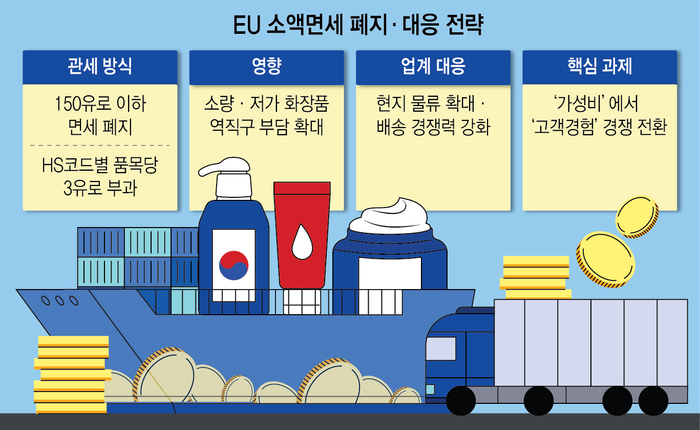
This new tariff structure is particularly unfavorable for K-beauty's typical retail model, which relies heavily on international direct shipping of small-volume, low-cost items such as individual skincare products and sheet masks. Because duties are applied per product classification, the tax burden escalates as consumers add different types of products to a single cart. In its announcement, Olive Young explained that an order containing two jars of cream and two cleansing foams would be categorized into two HS code groupings, resulting in a €6 charge. For single, low-priced items, these flat-rate fees will account for a disproportionately large share of the final purchase price.
The mounting pressure on the K-beauty sector reflects a broader global tightening on low-value e-commerce imports. Last August, the United States ended key tariff exemptions on small shipments, requiring formal customs clearance for packages valued under $2,500. While the policy primarily targeted ultra-low-cost Chinese e-commerce giants such as Shein and Temu, K-beauty companies have also been caught up in the shift. The United Kingdom is reportedly considering similar measures to align with the EU's more stringent stance on cross-border online retail.
Larger K-beauty players with established regional infrastructure expect the impact to be more manageable. An official from APR, a beauty tech firm aggressively expanding in Europe, noted that because the company operates with localized logistics and inventory management systems within the region, the direct effect of the new rules should be limited. However, the official added that changes in customs and logistics policy can still create unexpected friction, and the company intends to monitor regulatory trends very closely.
With consumers poised to absorb higher costs, experts argue that competing solely on affordability is no longer a viable strategy for global e-commerce players. Instead, brands will need to sharpen their edge by optimizing the end-to-end customer experience, covering fast and reliable delivery, smoother customs clearance, and deeper localization in product selection and marketing.
An Olive Young spokesperson acknowledged the tightening global regulatory environment, citing successive policy shifts in both the United States and the EU. In response to these headwinds, the company plans to continuously enhance its delivery networks, digital platform, and overall customer experience, aiming to provide a seamless and convenient shopping journey for K-beauty fans worldwide.
