






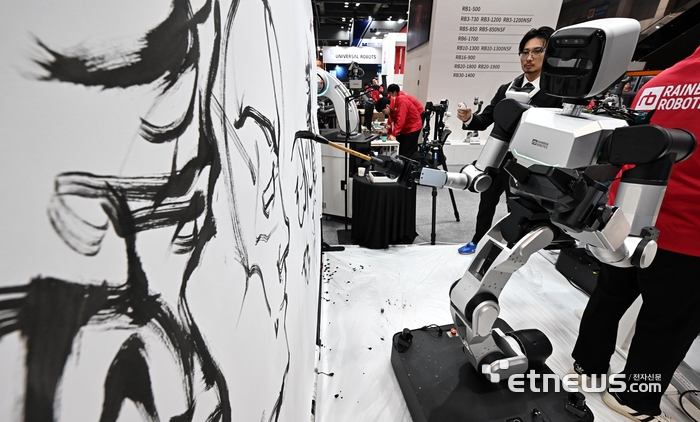
Samsung Electronics is increasing its supply of humanoids to Japan's Toyota, the world's largest automaker, in its robot business sector. As the partnership between the two companies strengthens around its subsidiary, Rainbow Robotics, Samsung Electronics' robot business also appears to be on a growth trajectory.
According to the industry on the 6th, Rainbow Robotics has been steadily expanding its supply volume since its initial delivery of the mobile humanoid robot 'RB-Y1' to Toyota in 2024. The total number of RB-Y1 units purchased by Toyota so far is understood to be around 25.
It is known that the initial batch supplied by Rainbow Robotics to Toyota in 2024 was around 5 to 6 units. This means that the supply scale has increased about fivefold in two years.
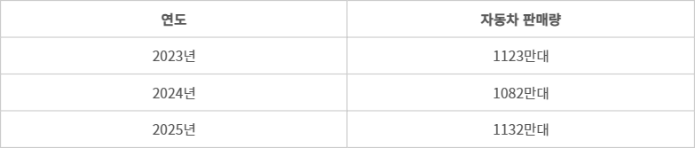
Toyota ranked first in global automaker sales for the sixth consecutive year, selling 11,322,575 vehicles worldwide last year. Analysts say that Rainbow Robotics' technological competitiveness has been proven once again given that the world's largest automaker is expanding its introduction of Korean-made humanoid robots.
Japan is a robot powerhouse with world-class industrial robot companies such as Fanuc, Yaskawa Electric, Kawasaki Heavy Industries, and Epson. It is also counted as a country with the most solidly built supply chain for core robot materials, parts, and equipment, such as motors and reducers. Amid this powerful domestic robot ecosystem, Toyota's continuous introduction of Rainbow Robotics' humanoid robots is the result of highly evaluating the product's performance and usability.
The competition among global automakers to introduce humanoid robots is also intensifying day by day. Tesla is expanding its production site application with its self-developed humanoid 'Optimus,' and Hyundai Motor is doing the same with its subsidiary Boston Dynamics' 'Atlas.'
The background behind the automotive industry's active move to introduce humanoid robots lies in the need to respond to labor shortages and improve production efficiency. The strategy is to reduce labor cost burdens and boost productivity by deploying robots not only in simple repetitive processes but also in various tasks such as parts transportation and assembly assistance. In particular, mobile humanoids like the RB-Y1 are highly versatile as they can move and work across multiple processes rather than being confined to a fixed line.
A robot industry official said, “Amid this trend, the fact that Samsung Electronics and Rainbow Robotics expanded their supply to Toyota means they have been recognized for their proven technological prowess,” adding, “The fact that repurchases continued in Japan, where the robot ecosystem is solid, can be seen as increasing the possibility of expanding sales channels to other automakers.”
This achievement is expected to act positively on securing Samsung Electronics' new growth engines as well. Samsung Electronics acquired Rainbow Robotics last year to nurture the robot business as a future growth engine. Following the recent expansion of its business into the logistics sector by supplying the RB-Y1 to Coupang's logistics center, the company is broadening its global customer base in the manufacturing sector as well by strengthening cooperation with Toyota.
Based on its synergy with Rainbow Robotics, Samsung Electronics plans to accelerate the expansion of robot supplies to global companies in the future by expanding its product lineup and advancing its technological competitiveness.