







Title: US Data Center Boom Fuels K-Battery ESS Demand
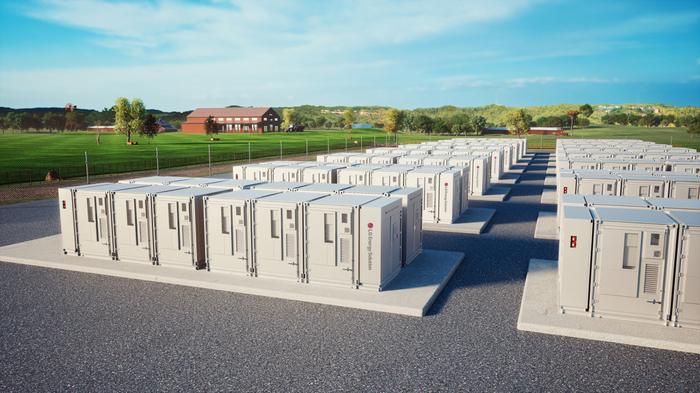
Google has secured power from one of the largest solar and energy storage system (ESS) projects in the United States, with LG Energy Solution supplying the ESS component--a deal that signals growing opportunities for Korean battery makers as US AI data center investments scale up.
Google and US independent power producer Cypress Creek Renewables announced on July 14 (local time) that construction has begun on Phases 1 and 2 of the “Steel River Energy Center” in Arkansas.
Through a power purchase agreement (PPA), Google will secure 1.6 gigawatts (GW) of solar generation capacity and 1.9 gigawatt-hours (GWh) of battery storage from the project's first two phases. Once all three phases are complete in 2029, those figures will expand to 2.5 GW and 2.9 GWh, respectively. The power generated will be fed into the local grid to supply major demand centers, including new data centers and steel manufacturing facilities.
The ESS will be supplied by LG Energy Solution Vertech, LG Energy Solution's system integration subsidiary. The systems will be assembled in the US using North American-made battery cells, with the order estimated to be worth several hundred billion KRW.
Separately, Meta announced on July 13 that it is expanding the computing capacity of its “Hyperion” data center under construction in Louisiana from 2GW to 5GW, pushing total investment past 50 billion USD.
With the data center's scale now 2.5 times larger than originally planned, demand is expected to rise not just for power generation equipment but also for ESS systems, which are needed to smooth out fluctuations in power demand and store renewable energy.
PJM, the largest power market in the US, recently fell short of its required capacity in a capacity market auction, coming in 6.8GW below its reliability target--a shortfall largely attributed to surging power demand from data centers.
As the growing number of data centers and extreme heat continue to strain power grids, the need for ESS is intensifying. Meanwhile, community pushback against the heavy power and water usage associated with data centers, as well as their reliance on diesel generators, is pushing operators toward an alternative: building their own power infrastructure that combines renewable energy with ESS.
“AI data centers need to secure large amounts of power reliably while also being able to respond to sudden load fluctuations, which means demand for grid-scale ESS and backup power systems is likely to rise in tandem,” an industry source said. “For Korean battery makers that have already built out production capacity in North America, this presents an opportunity to win new orders and boost factory utilization rates.”
