




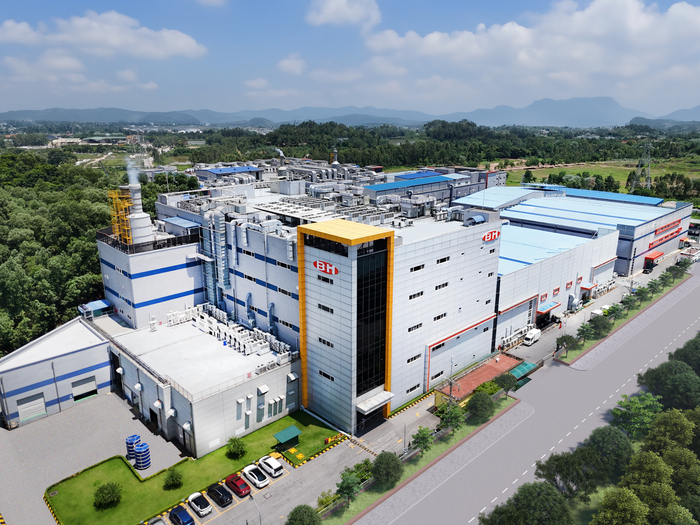
BH is expanding beyond its core business in flexible printed circuit boards (FPCBs) for smartphones, tablets and laptops to target high-value, high-layer-count printed circuit boards (PCBs) for AI servers, automotive electronics and other advanced industries.
The company said on Nov. 3 that it is entering high-specification PCB markets, including computing boards for servers and data centers, boards for optical networking modules, and PCBs for actuators, sensors and control boards used in precision robotic hands.
Given the technical complexity of high-layer-count PCBs, stabilizing production yields and meeting customers' qualification requirements will be critical. BH plans to draw on its proven FPCB technology and mass-production expertise to address rapidly growing demand for high-layer-count rigid PCBs.
The company plans to invest approximately KRW110 billion through 2027 to expand production capacity in South Korea and Vietnam. The investment will go beyond expanding its existing laptop and tablet production base, focusing on manufacturing capabilities for high-layer-count, high-density PCBs used in AI servers, data centers, robotics and automotive electronics.
BH has also established a PCB Business Division as part of an organizational restructuring. The division will oversee AI server and automotive PCB operations, separate from the company's core mobile FPCB business. By closely coordinating research and development, manufacturing and quality control, BH aims to accelerate the development of high-specification products for new customers and ensure stable mass production.
The company also plans to leverage its group-wide business networks in automotive electronics and robotics to secure global PCB customers and meet industry-specific requirements.
BH's expansion comes amid a surge in AI infrastructure investment. To handle high-speed data processing, AI server PCBs require more layers and higher-performance materials than conventional server boards, resulting in higher selling prices.
According to the Taiwan Printed Circuit Association (TPCA), the global PCB market is expected to grow 23% this year to $113.7 billion. Goldman Sachs also forecasts strong growth in the AI server PCB market through 2027, from $3.1 billion in 2024.
Analysts are also watching BH's expansion. In a recent report, Daishin Securities said the company's addition of three new global customers would begin to meaningfully diversify its revenue in 2027. The brokerage forecast revenue of KRW1.9782 trillion and operating profit of KRW115.3 billion for that year.
“The expansion of AI infrastructure and advances in automotive electronics and robotics are creating new growth opportunities,” a BH representative said. “Through proactive investment to strengthen our technological competitiveness, we aim to become a global specialist in advanced PCBs.”
