








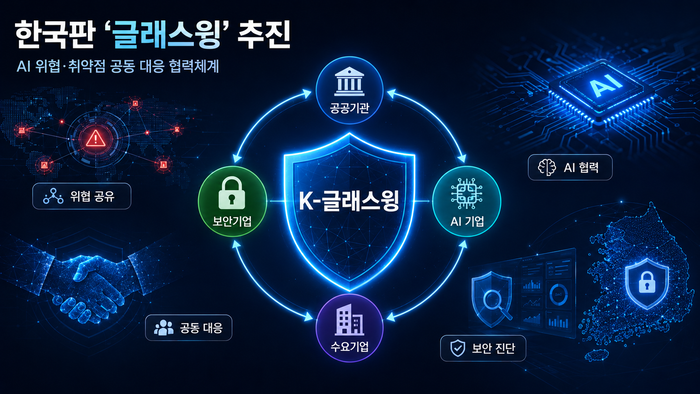
South Korea's cybersecurity sector is launching a national initiative dubbed “K-Glasswing” this month to counter the rapidly evolving landscape of AI-driven cyber threats. As artificial intelligence increasingly becomes a double-edged sword used for both cyberattacks and defense, the project aims to fortify the nation's cyber defenses by pooling the capabilities of public- and private-sector security entities and cutting-edge AI technologies.
The Korea Information Security Industry Association (KISIA) announced plans to officially inaugurate the “K-Glasswing” initiative this month, spearheaded by its AI Security Intelligence Council, with the name still tentative. The project is modeled after Anthropic's “Glasswing,” a prominent global collaborative framework dedicated to AI safety and security.
Led by Chan-am Park, CEO of the offensive security firm Stealien, the AI Security Intelligence Council plans to bring together cybersecurity firms, AI developers, government and public agencies, and enterprise end-users in phases. Following consultations with key stakeholders this month, the initiative will kick off with an initial cohort of early participants before gradually expanding its ecosystem.
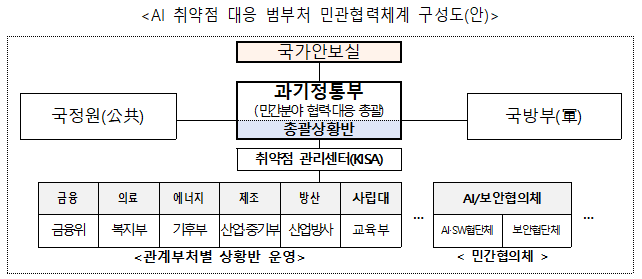
K-Glasswing will serve as a core pillar of the South Korean government's broader, inter-ministerial public-private framework designed to address AI vulnerabilities. Its primary mission will be to facilitate the sharing of threat intelligence and AI vulnerabilities, while fostering joint defense mechanisms between security vendors and enterprise clients.
Within this ecosystem, cybersecurity firms will conduct AI vulnerability assessments, prioritize risk mitigation, and provide expert consulting. Enterprise clients, on the other hand, will be able to request comprehensive security audits for their software and network infrastructures.
For the initial security diagnostics, top-tier global open-source AI models will be evaluated. This phase will be handled by domestic offensive security firms--commonly known as white-hat hacking organizations--leveraging their extensive real-world penetration testing experience to support participating enterprises.
On the government side, the Korea Internet & Security Agency (KISA), which already participates in Anthropic's “Glasswing” and OpenAI's “Daybreak,” is expected to collaborate closely with the council. KISA plans to share the global technical trends and threat intelligence it acquires from these international initiatives with the domestic private sector.
The council also plans to extend participation invitations to major South Korean AI pioneers, including Upstage, LG AI Research, SK Telecom, and Naver Cloud. This collaboration between cybersecurity experts and AI developers is highly anticipated to drive the development of specialized, sovereign AI security models for South Korea.
“The K-Glasswing project is a vital initiative designed to safeguard South Korea's digital sovereignty against increasingly sophisticated cyber threats,” a KISIA official stated. “We look forward to building a robust, cooperative ecosystem that unites government, industry, and academia.”
