






The extended-range electric vehicle (EREV) segment—already proven to have strong growth potential in China—is now moving into North America, setting the stage for a new competition among global automakers. Hyundai Motor is preparing to enter the market with an EREV version of the Santa Fe, as major U.S. automakers and new entrants expand their own range-extended lineups.
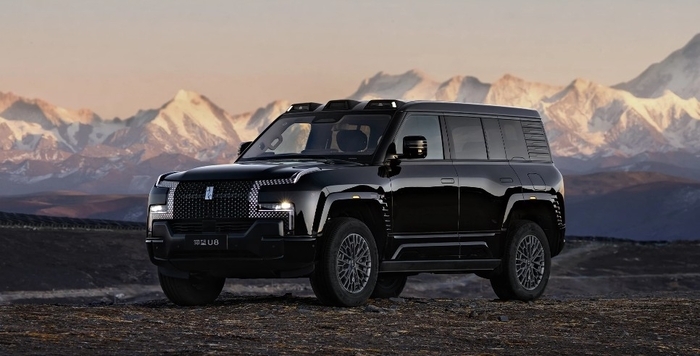
EREVs use electric motors to drive the wheels while an internal-combustion engine serves primarily as an onboard generator, extending total driving range and reducing reliance on public charging. The category initially took shape in China, led by automakers including Li Auto and BYD. It is now gaining traction in North America, where Stellantis, General Motors and Volkswagen Group's Scout Motors are targeting high-demand pickup truck and large SUV segments.
North America is viewed as a particularly favorable market for EREVs because of its long-distance driving needs, vast geography, and uneven charging infrastructure. Large pickups and SUVs can also better accommodate the additional battery and generator hardware required for a range-extended powertrain.
According to Fortune Business Insights, the global EREV market is expected to continue growing at an annual rate of around 14% and expand rapidly into the early 2030s. The estimate reflects a market forecast and may vary depending on the definition of EREV used by the research firm.
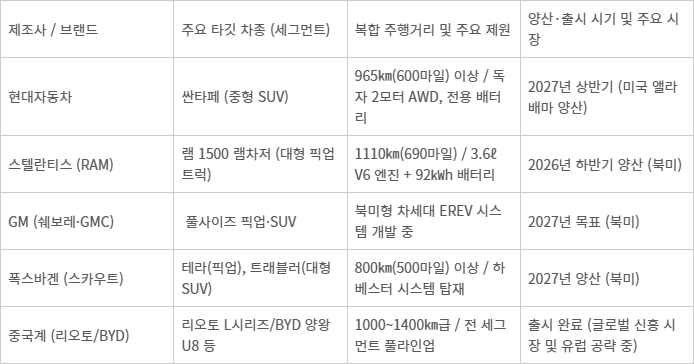
Stellantis has begun production preparations for the Ram 1500 Ramcharger, a full-size pickup with a targeted total range of up to 690 miles (about 1,110 km) on a full battery charge and fuel tank. The model uses a 92-kWh battery and a 130-kW onboard generator.
GM, which previously produced the Chevrolet Volt range-extended electric vehicle, is preparing to reintroduce EREV powertrains for North American full-size pickups and large SUVs. Scout Motors, a Volkswagen Group brand, has also confirmed EREV versions of its Terra pickup and Traveler SUV, using its “Harvester” range-extender system. Scout projects more than 500 miles of range for the EREV variants, with initial production targeted for 2027.
Hyundai has also outlined its North American EREV roadmap. The automaker has selected the midsize Santa Fe SUV as its first EREV model and plans to begin production at Hyundai Motor Manufacturing Alabama in the first half of 2027.
The Santa Fe EREV is expected to combine Hyundai-developed high-performance battery cells with a dual-motor all-wheel-drive system and deliver more than 600 miles (about 965 km) of total range on a full charge and fuel tank. Hyundai's Genesis luxury brand is also planning to introduce an EREV model in 2027 with a targeted total range of more than 640 miles (about 1,029 km).
An automotive industry official said EREVs, having demonstrated their potential in China, could enter a major growth phase in North America's large family-vehicle market from 2027. With global automakers competing from broadly similar starting positions, the official said local U.S. production and resulting price competitiveness will likely be decisive factors in the race for leadership in North America's EREV market.