








The U.S. government has officially added Chinese display-panel makers BOE and Tianma to its blacklist of Chinese military companies. It is the first time Washington has directly applied such a national-security designation to the display sector, drawing strong attention across global technology industries.
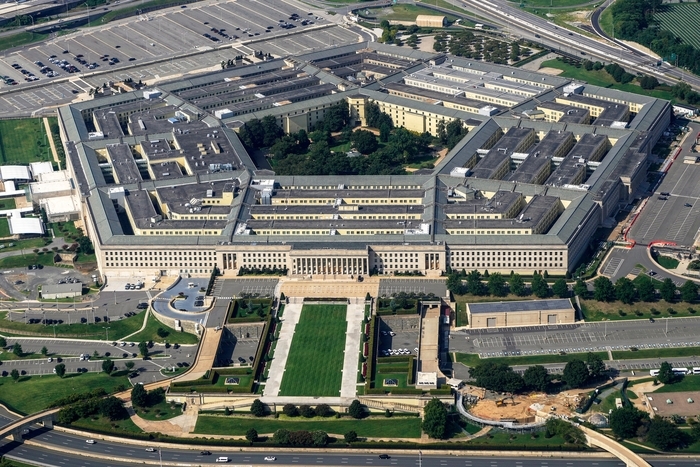
On June 8 local time, the U.S. Department of Defense released an updated list of Chinese military companies operating directly or indirectly in the United States. In the display sector, BOE, China's largest panel maker, and Tianma, the country's fourth-largest, were newly designated.
According to the Pentagon, BOE maintains indirect ties to China's Ministry of Industry and Information Technology (MIIT), which oversees the country's defense and technology policies. The company was also identified as a civil-military fusion contributor supporting China's defense industrial base, based on its partnerships with the People's Liberation Army (PLA) and its location in a designated civil-military fusion industrial zone. Tianma was assessed as being indirectly owned by the State-owned Assets Supervision and Administration Commission (SASAC), reflecting the government support embedded in its creation, approval, and management under China's military-industrial planning system.
While the U.S. has previously targeted China's telecommunications, semiconductor and battery sectors, this is the first time the display industry has been directly pulled into the national-security regulatory framework. Analysts say the move could trigger significant shifts across global IT and automotive supply chains.
Under the National Defense Authorization Act (NDAA), blacklisted entities are barred from direct procurement by the Pentagon and face heightened scrutiny from global defense and IT firms that do business with the U.S. government. The designation may also serve as a reference point for broader sanctions by other U.S. agencies.
The designation comes after the U.S. House Select Committee on the Chinese Communist Party first urged restrictions on the companies in September 2024. “Unlike semiconductors, where Washington's containment of China began much earlier, the key takeaway is that the display sector has now officially come under pressure,” a South Korean display industry expert said.
Beyond the display makers, the updated blacklist also includes major electric vehicle, artificial intelligence and robotics companies such as Alibaba, BYD, Baidu and Unitree.
