






LG Group has set a goal of achieving tangible business results and generating revenue from its space-related ventures by 2030. As the global space industry enters a period of rapid growth, the company plans to leverage its group-wide capabilities to secure new engines of future growth.
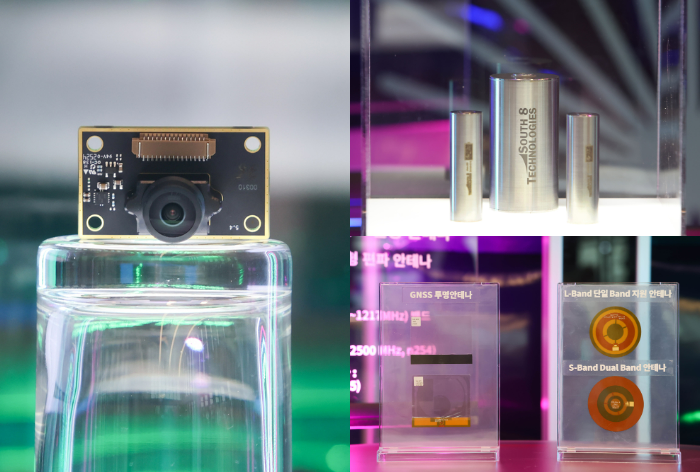
LG is pursuing its space business initiatives through LG Sciencepark, the group's central research and development (R&D) hub. LG Sciencepark is leading collaboration among affiliates and maximizing synergies across the group. The strategy brings together the core competencies of various subsidiaries, including components from LG Electronics, materials from LG Chem, batteries from LG Energy Solution, and camera modules from LG Innotek.
LG also plans to establish dedicated organizations within individual affiliates to focus on advanced space technologies. This move is seen as part of the company's efforts to systematically develop and expand its presence in the space sector.
One of the key drivers behind LG's entry into the space industry is the slowing growth of its traditional core businesses, particularly home appliances and chemicals. With demand for consumer electronics plateauing and the chemical industry facing significant market volatility, LG has determined that it must identify sustainable new growth opportunities for the future.
The space sector offers a wide range of business opportunities, including satellite communications, space-based data centers, edge-computing satellites, and lunar exploration missions.
Space presents environmental conditions vastly different from those on Earth, including extreme temperature fluctuations, vacuum conditions, and intense radiation. As a result, components and materials designed for space applications must meet requirements that differ significantly from those of terrestrial products. Reliability and safety verification are especially critical in space environments. Given its extensive technological expertise in electronics, chemicals, and communications, LG is considered well-positioned to gain a competitive advantage in emerging space markets.
LG views the battery sector as its most significant business opportunity in the space industry. While Chinese companies such as CATL and BYD have been increasing their global battery market share through strong price competitiveness, quality remains the key differentiator for space-grade batteries, where safety is paramount. In fact, LG Energy Solution is reportedly in discussions with global space companies, including SpaceX, leveraging its technological advantages in advanced battery systems.
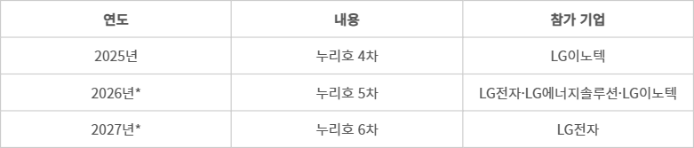
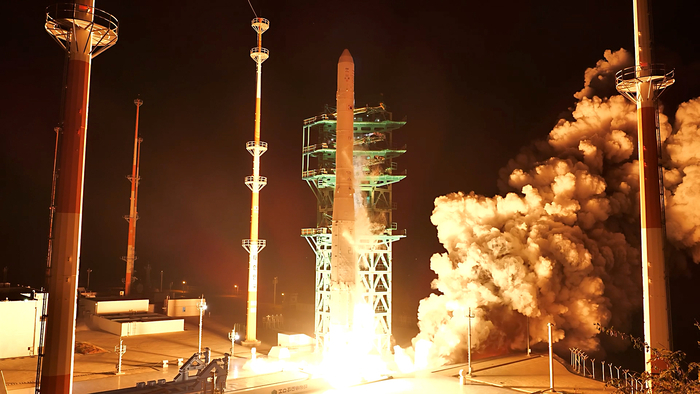
LG is also pursuing technology advancement through real-world validation. Last year, in collaboration with Unmanned Exploration Laboratory, a startup specializing in lunar rover R&D, LG tested an LG Innotek camera by integrating it into the fourth launch of the Nuri rocket, allowing its performance to be verified in an actual space environment.
For the fifth Nuri launch this year and the sixth launch next year, LG plans to expand the number of components being tested, including technologies from LG Electronics and LG Energy Solution. Based on these efforts, the company is also considering launching its own cube satellite, developed in-house, by 2028.
Through proactive technology development and validation, LG aims to secure an early foothold in the emerging space industry. The company's strategy is to extend the technological capabilities it has built on Earth into the rapidly growing space economy.
The global space industry is expected to maintain strong growth momentum in the coming years. According to the World Economic Forum (WEF), the global space market is projected to expand from $630 billion in 2023 to $1.8 trillion by 2035, nearly tripling in size over the period. In Korean currency terms, this represents growth from approximately KRW 965 trillion to KRW 2,760 trillion.