








CSLi's dual expertise in traditional structured data and unstructured data gives it a distinctive technological edge.
Built on a 3C culture of content, connect and communication, the company is aiming to reach 100 billion KRW in annual revenue within five years.
“Data analysis in the AI era should never be a black box that simply spits out a final result,” said Choon-shik Lee, CEO of CSLi. “The process must be simplified, but the results must remain fully explainable. Only then can enterprises confidently make billion-won decisions based on that data.” Lee said this approach defines the direction of the data business in the age of AI transformation (AX).
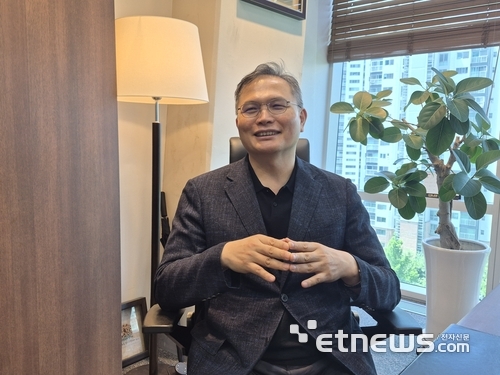
Lee founded CSLi in 2013 after building a strong reputation as a data architecture expert during his tenure as a team leader and manager at LG CNS. What began as a traditional structured-data consulting firm has since evolved into a broader data company that bridges big data and generative AI.
CSLi's core strength lies in its dual expertise in structured and unstructured data. Lee said few companies in the market combine deep experience in relational databases such as Oracle and PostgreSQL with advanced capabilities in unstructured-data architectures, including vector and graph databases, which are increasingly important in AX projects. That breadth of expertise helps CSLi stand out in complex enterprise AI deployments.
The result of that technical foundation is BigZami, CSLi's flagship analytics AI platform. BigZami turns complex data preprocessing and analysis into intuitive, block-based visual workflows. It is designed to be accessible to non-experts while still delivering strong explainability and reliability for AI-driven outputs.
“Feeding raw data directly into a generative AI model inevitably leads to hallucinations and unreliable results,” Lee said. “BigZami visualizes and explains each analytical step. That is especially important for institutions where accuracy is non-negotiable, such as financial firms and government agencies, because it keeps advanced analytics grounded and auditable.”
CSLi has already built a strong track record in South Korea's public sector. Most notably, the Korean National Police Agency replaced its legacy foreign analytics software, Tableau, with CSLi's solution and has used it for four consecutive years. The company has also secured major public-sector contracts involving AI-driven civil complaint processing and data analysis for the Korea Railroad Corporation (KORAIL), Korea Land and Housing Corporation (LH), and the city of Gwangju in Gyeonggi Province.
Building on that public-sector success, CSLi is now expanding into private industries, with a focus on finance and manufacturing. Although private-sector enterprises in South Korea have traditionally preferred foreign software, CSLi aims to compete by proving the cost efficiency and technical agility of its domestic solution. At the same time, the company is preparing for overseas expansion, including into Saudi Arabia, through a scalable cloud-based software-as-a-service (SaaS) model.
Lee attributes CSLi's organic growth to a corporate culture centered on continuous learning, knowledge sharing and open debate. Notably, the company has built its market presence without a dedicated sales team, relying instead on technical blog content and specialized data education programs. Lee calls this approach its “3C Strategy”: Content, Connect and Communication. The idea is to produce expert content grounded in technical capability, use that content to connect with the ecosystem and communicate effectively to solve real industry problems.
CSLi is projecting 25 billion KRW in revenue this year and has laid out a roadmap to reach 100 billion KRW within the next five years. Lee said that as BigZami, together with the company's broader product lineup--including the database design tool ERGreen, the migration utility MetaWorks and specialized civil complaint solutions--solidifies its position in the market, CSLi plans to pursue an Initial Public Offering (IPO) at a valuation that reflects its market impact.
