






Chinese home appliance giant Haier is rapidly expanding its footprint in Japan's washing machine market, overtaking Panasonic to secure the number-two spot last year. As Japanese tech conglomerates retreat from low-margin major appliances, traditionally known as “white goods,” Chinese companies are moving quickly to fill the gap. The shift has raised alarms in South Korea's tech sector, where experts warn that cutting investment in core home appliances for short-term profitability could ultimately mean surrendering domestic market leadership and manufacturing strength to Chinese rivals.
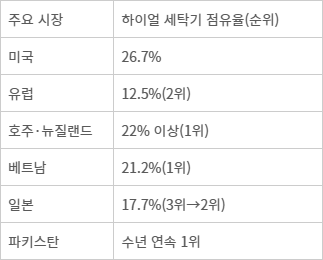
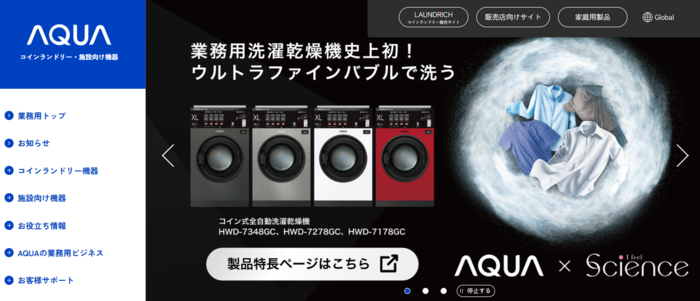
According to Haier's 2025 annual report, the company captured a 17.7% share of Japan's washing machine market last year. That result reflects a dual-brand strategy built around Haier's budget-friendly lineup and AQUA, a premium white-goods brand acquired from Japan's Sanyo Electric in 2012. By using AQUA to target high-end consumers while positioning the Haier brand for the mid-to-low end of the market, the company has succeeded in penetrating a traditionally insular market. Haier has pursued a similar localized acquisition strategy globally, including through its purchase of GE Appliances in the United States.
Haier's aggressive push in Japan extends well beyond laundry. Led by its AQUA lineup, the company ranked first in Japan's refrigeration and freezing market in 2024. Haier is now leveraging its position across the three core categories of major household appliances--refrigerators, freezers and washing machines--where it holds the highest combined sales volume in Japan.
This rapid rise has been driven in part by Japanese tech giants scaling back their traditional appliance businesses. Hitachi, long a leading player in Japan's washing machine market, had been considering a divestment of its home appliance unit since last year. In April, Hitachi formally spun off its consumer electronics business to concentrate resources on commercial HVAC systems.
A similar shift is underway in Japan's television market. After acquiring Toshiba's TV business, Chinese electronics maker Hisense has dominated the upper end of the market using the legacy REGZA brand. Meanwhile, other Chinese makers such as TCL are aggressively taking share with large-screen, low-priced displays. Together, Hisense's REGZA and TCL account for roughly half of Japan's TV market.
Industry insiders worry that South Korea could be the next target of China's major appliance expansion. The domestic TV market is already feeling the pressure, with TCL mounting an aggressive challenge in the mid-to-low end segment.
Tech analysts say domestic firms must stop treating major appliances as merely low-margin, commoditized hardware. Refrigerators, washing machines and air conditioners are daily touchpoints with consumers inside the home. They also serve as the foundation for smart-home ecosystems, installation and repair networks, and complex component supply chains. If a company gives up manufacturing capability and retail reach in these core products, it will gradually lose the leverage needed to lead next-generation sectors such as AI-powered appliances, hardware-as-a-service subscriptions, home energy management and broader smart-home platforms.
An industry official said the transformation of Japan's appliance market is a stark warning of what happens when manufacturers lose direct contact with consumers. If South Korean companies treat core home appliances purely as targets for cost-cutting, they risk repeating the same mistakes made by their Japanese predecessors.