








The South Korean government is considering extending its program to support the procurement of graphics processing units (GPUs), a critical resource for artificial intelligence (AI). Amid surging demand for high-performance GPUs and the growing need to build “sovereign AI,” the government believes it must continue leading efforts to expand the nation's AI infrastructure.
According to industry sources on July 7, the Ministry of Science and ICT is assessing the capacity of major domestic cloud service providers (CSPs) to deploy additional GPUs, with the goal of extending its AI Computing Resource Utilization Enhancement Program.
The initiative centers on the government purchasing GPUs with public funds, installing them in CSP-operated data centers, and making the computing resources available to industry, academia, and research institutions. After allocating approximately KRW 1 trillion to the program last year, the government invested another KRW 2 trillion this year, securing more than 20,000 GPUs.
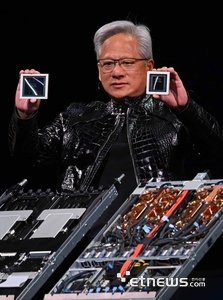
The program was originally scheduled to conclude this year. However, demand for cutting-edge GPUs--such as NVIDIA's next-generation Vera Rubin platform--has risen sharply, while developing independent AI models that do not rely on global Big Tech companies has emerged as a national priority. As a result, policymakers see a growing need for continued government support.
President Lee Jae-myung recently underscored the urgency of expanding the country's GPU infrastructure. At the Future New Security Innovation Enterprise Strategy Meeting held on June 26, he expressed concern over the slow pace of GPU procurement and instructed officials to prepare practical measures, including securing additional funding, to address potential resource shortages.
The Ministry of Science and ICT is currently surveying CSPs on the availability of data center floor space for equipment installation in preparation for next year's GPU procurement program. It is also developing a comprehensive plan that includes improving data center efficiency and securing additional installation capacity. Industry sources say the ministry has requested an off-budget allocation from the Ministry of Economy and Finance to support GPU procurement. Given this year's spending and the government's commitment to expanding AI infrastructure, industry estimates suggest the total investment could reach around KRW 4 trillion.
Industry observers note, however, that the biggest challenge is no longer procuring GPUs but finding sufficient data center capacity to install them. Operating thousands of high-performance GPUs simultaneously requires massive power supplies and advanced cooling systems, yet many domestic data centers are already approaching full capacity.
“Even if the government provides funding to purchase the hardware, the lack of physical space to install it remains a major bottleneck,” one industry official said. “This year, many companies struggled to participate in the program because of insufficient data center capacity.”
The official added that the issue extends beyond simply finding vacant floor space. “To maximize GPU performance, the systems must be interconnected into large computing clusters. However, there is a severe shortage of specialized facilities capable of supporting that kind of clustered infrastructure.”
