








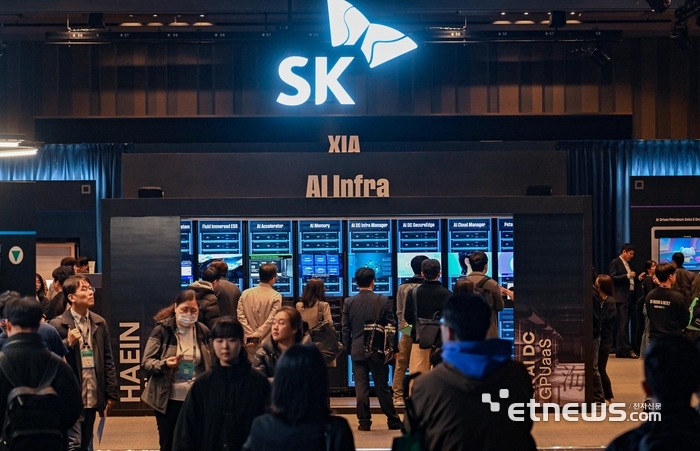
The global supply of artificial intelligence data centers (AIDCs) is failing to keep pace with exploding demand, exacerbating supply-demand imbalances. SK Telecom is capitalizing on this gap by constructing AIDCs with a total capacity of 15 gigawatts (GW) and aiming to preempt infrastructure demand from global big tech companies targeting Asia.
According to a report by McKinsey on the 19th, global data center demand is growing by 19-22% annually, but supply is lagging, with projections indicating a 15 GW shortage in the U.S. alone by 2030.
The rising power consumption of graphics processing units (GPUs), central to AI operations, is causing exponential growth in electricity demand. Lead times for large transformers essential for hyperscale AIDCs have extended to an average of 143 weeks (approximately 2 years and 9 months), intensifying supply bottlenecks. Goldman Sachs predicts that if this trend continues, data center power demand could outstrip supply by up to 160% by 2030.
SK Telecom plans to exploit this gap. Starting with its first AI data center (DC) in Ulsan, co-built with Amazon Web Services (AWS), the company will develop a cluster exceeding 2 GW in the Yeongnam region and add another 1 GW in the Southwest. It aims to sequentially open a 5 GW facility starting in 2029 and expand to a 15 GW scale by 2035, adjusting to market demand.
Amid AI infrastructure shortages, Asia's data center landscape is being reshaped. Singapore, once a regional hub, halted new constructions in 2019 as data centers consumed about 7% of the city-state's total power. Johor, Malaysia, which absorbed this demand, doubled its data centers in a year, but projections suggest they could account for 40% of regional power demand by 2035, raising concerns over energy and infrastructure strain.
In contrast, South Korea boasts stable power supply conditions based on nuclear and liquefied natural gas (LNG). As of December last year, the country's total power generation capacity reached approximately 156.6 GW, exceeding the record-high electricity demand of 97.1 GW in 2024. The operational rate of its 26 nuclear reactors stands at 83.8%. Additionally, the domestic procurement of key AIDC components like high-bandwidth memory (HBM) is a notable strength.
An SK Telecom official stated, “The AI dominance race is shifting to a battle over how quickly and reliably data centers can be supplied. We will turn the supply-demand imbalance crisis into an opportunity, enabling Korea to secure new leadership in the AI infrastructure sector.”
