







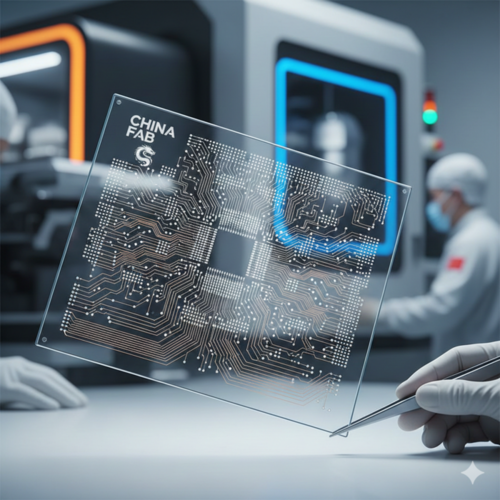
Huawei is accelerating the mass production of semiconductor glass substrates through its independent supply chain next year. By doing so, the company plans to proactively adopt glass substrates, which are gaining attention as next-generation substrates for artificial intelligence (AI) semiconductors.
This move is seen as a strategic effort to speed up Huawei's offensive in the AI semiconductor market. If Huawei succeeds in mass production, there are concerns that leadership in glass substrates could shift to China.
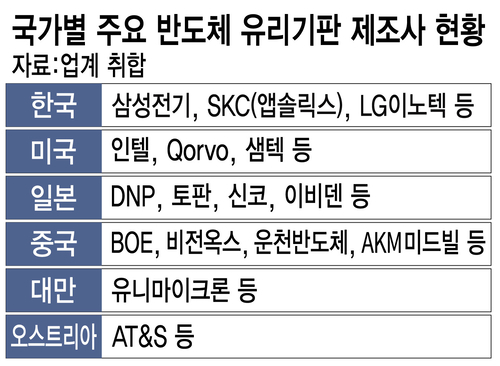
According to industry sources on the 27th, Huawei has established a roadmap to mass-produce semiconductor glass substrates by 2027. The key plan is for glass substrate manufacturers collaborating with Huawei to begin production next year and apply them to advanced semiconductor chips such as Huawei's AI accelerators. Potential manufacturing partners include BOE, Visionox, Yunchen Semiconductor, and AKM Midvalley.
This timeline is over a year faster than South Korean glass substrate manufacturers, who are preparing for mass production only after 2028. While the industry expects the actual glass substrate platform (AI accelerator + glass substrate) to be released around 2030, if Huawei follows its plan, China could launch it as early as 2028.
An industry insider stated, “Huawei is accelerating collaboration with major glass substrate manufacturers and packaging companies to adopt glass substrates,” adding, “Most companies in Huawei's supply chain are rushing to advance their technology and prepare for production, aiming for mass production of glass substrates next year.” It has also been confirmed that Huawei and its partner manufacturers are exploring collaborations with domestic materials and equipment companies for glass substrates.
Huawei's rush to commercialize glass substrates is interpreted as a strategic move to accelerate its push into the AI semiconductor chip market.
Currently, the AI semiconductor market is dominated by U.S. companies led by Nvidia. Amid U.S.-China tensions, Huawei—facing difficulties entering the U.S. market—is targeting niche markets including China. A representative example is Huawei's attempt to supply its AI accelerator 'Ascend' series to South Korea and global markets in the fourth quarter of this year.
Huawei is a latecomer in the AI semiconductor chip market. As such, it needs a differentiation strategy to catch up with the leaders. Glass substrates are seen as a key trump card for this strategy. By adopting glass substrates earlier than other AI semiconductor chips, Huawei aims to offer customers a new option. It is expected to actively market the reduction of total cost of ownership (TCO) for AI infrastructure through price competitiveness.
A semiconductor glass substrate industry insider said, “If Chinese glass substrate manufacturers lower supply prices through subsidies, Huawei's AI platforms using glass substrates could gain competitiveness,” adding, “There is a significant possibility that next-generation technology and price competitiveness could disrupt the AI semiconductor chip market landscape.”
