








Equipment lead times emerge as a key variable in production planning
Samsung Electronics and SK Hynix also expected to feel the impact
Companies move to place purchase orders earlier as a countermeasure
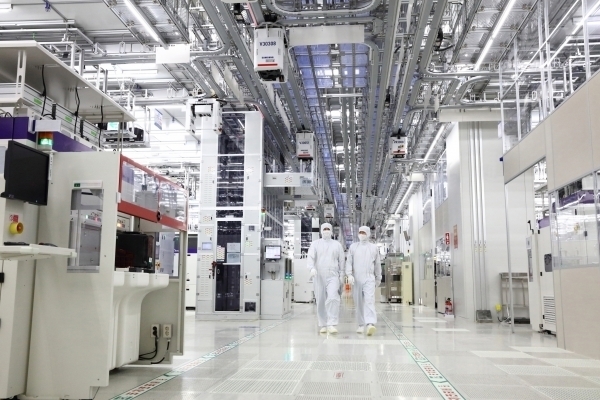
Lead times for major semiconductor manufacturing equipment have stretched to as much as twice their normal length as chipmakers worldwide accelerate investment in new fabrication plants, driving a surge in equipment orders.
Longer equipment lead times are emerging as a critical factor in production planning, intensifying competition among semiconductor manufacturers to secure key tools. Samsung Electronics and SK Hynix, both of which are expanding multiple fabrication plants, are reviewing measures such as placing purchase orders earlier than usual.
According to industry sources on July 23, lead times for major equipment supplied by the world's five largest semiconductor equipment manufacturers—Applied Materials, ASML, Lam Research, Tokyo Electron and KLA, which together account for about 70% of the global market—have increased by 1.5 to two times. In practical terms, equipment that previously arrived six months after a purchase order is now taking up to a year to deliver.
Lead times have also lengthened at major South Korean equipment suppliers. One company supplying front-end and back-end equipment to TSMC and Micron said delivery times for some products have increased from three to four months to six to eight months. Another supplier of semiconductor packaging equipment to Micron reported lead times have increased by about 50%, with some products taking more than a year to deliver.
An executive at a semiconductor equipment company said even manufacturers that had secured production capacity in advance are operating their production lines at full capacity, while companies that failed to expand manufacturing capacity are facing mounting delivery delays as orders continue to rise.
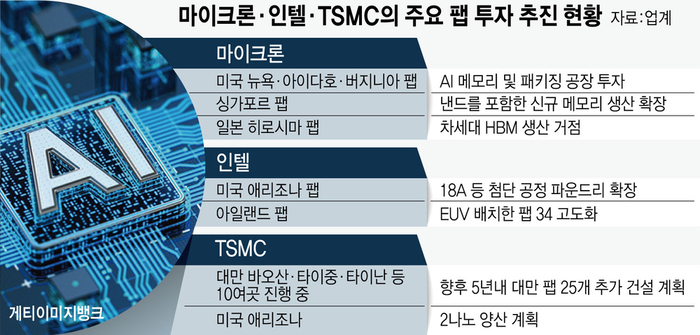
Industry analysts expect the longer equipment lead times to affect planned fabrication projects at Samsung Electronics and SK Hynix because delays in equipment deliveries could postpone the planned start-up of new fabs. Procurement teams at both companies are reportedly monitoring supplier lead times closely.
An industry official said Samsung Electronics and SK Hynix are considering placing equipment orders earlier than before to reflect longer lead times, adding that equipment availability has become a critical factor affecting fab investment and production schedules.
Semiconductor equipment lead times also increased sharply during 2021 and 2022, when supply chains were disrupted by the COVID-19 pandemic. The current situation, however, is driven primarily by large-scale fab investments by governments and semiconductor manufacturers.
The rapid expansion of AI infrastructure has fueled semiconductor demand, prompting chipmakers to build new fabrication plants around the world. The resulting surge in orders has lengthened delivery schedules at major equipment suppliers.
With countries and chipmakers continuing to invest in additional semiconductor manufacturing capacity, equipment lead times are expected to remain elevated. Industry participants also warn that supply shortages could spread beyond manufacturing equipment to broader fab construction and infrastructure.
Another industry official said global competition to secure semiconductor manufacturing equipment will intensify further, warning that companies unable to secure equipment in advance could lose their competitive position in semiconductor manufacturing capacity.
