









Dell Technologies is advancing into the enterprise AI market by offering customized consulting services that support everything from model selection to infrastructure setup, tailored to each company's AI needs. The company emphasizes its competitive edge in designing solutions that combine the necessary technologies and infrastructure based on customers' operational goals, data environments, and cost structures.
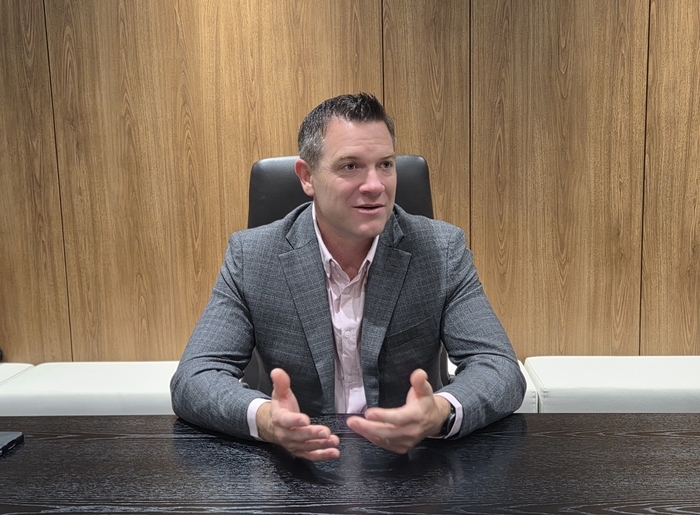
In a recent interview with this publication, Matt Dunphy, Dell's Senior Vice President of Global Systems Engineering, stated, “AI has moved beyond the exploration phase and is now entering a stage where it is being applied to actual operations and generating results.” He added, “The key is not which AI to adopt, but how to connect the right data, models, and infrastructure for each task and scale them into real operational environments.”
Dunphy stressed that for AI projects to progress from proof of concept (PoC) to actual deployment, the operational goals, data, models, infrastructure, and governance must be designed together from the start. He emphasized that AI should be approached from a holistic system perspective, not just as a matter of individual servers or models.
As AI workloads become more diverse, the limitations of processing all tasks in the same environment are becoming apparent.
Dunphy explained, “As inference costs rise, the priority is not to choose the most expensive infrastructure but to deploy workloads in the most suitable environments.” He added, “Companies should not pay for the infrastructure itself but for the business outcomes that AI generates.”
He continued, “Businesses no longer ask if AI is important, relevant, or applicable to them. Now, they don't ask if we can help, but how we can help.”
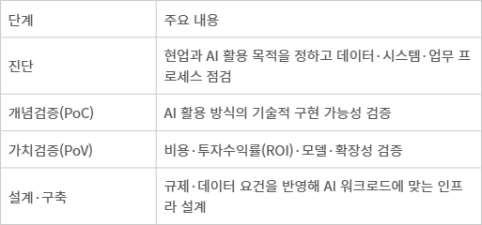
Dell supports the entire AI project lifecycle—from initial planning to actual operations. The company collaborates with business units to define AI use cases and priorities, identifies required data, and co-designs models, applications, compute, storage, network, security, and governance requirements. This approach ensures AI projects do not stall at the PoC stage but can scale into operational environments.
As data is a critical factor determining AI performance and scalability, the role of storage is also growing. Dell provides a storage portfolio that enables rapid data supply for AI while protecting sensitive data and scaling in line with increasing data volumes and AI workloads. The approach involves designing not only models and GPUs but also the entire infrastructure that drives AI, including the data itself.
Dunphy explained, “The first step is understanding what customers aim to achieve. Once business outcomes are identified, we can concretely connect the required data, systems, applications, and processes.”
Dell also offers environments where customers can experiment and validate solutions. With the newly introduced 'Deskside Agentic AI,' enterprises can prototype and conduct PoCs with their own data and models, while pre-evaluating the effects and costs of scaling to actual operations.
As AI usage grows, cost-efficiency from a 'tokenomics' perspective has become a key decision criterion. Dell repeatedly emphasized that instead of blindly opting for the latest or largest models, customers should analyze their operational needs and select models and infrastructure that match their required performance and usage levels.
Dunphy noted, “People tend to choose the latest models when given options, and these are usually the most expensive. However, in many cases, much more cost-effective models can handle the task sufficiently.”
The explanation continued: Since required performance varies by application, the key is to improve cost efficiency by selecting appropriate models rather than uniformly applying the latest or largest ones. This judgment extends beyond model selection to the design of the entire AI system that drives them.
Dell describes this approach as the 'AI Factory'—viewing AI not as a single product like a GPU server but as a system that requires integrated design of compute, network, storage, data, security, and more.
Dunphy stated, “We don't just sell servers and leave customers to figure out how to operate them. Our approach is to provide the entire architecture so customers achieve their desired outcomes.”
According to market research firm Principled Technology, the on-premises-based 'Dell AI Factory' has been shown to reduce total cost of ownership (TCO) by up to 63% and achieve a payback period of approximately 1.5 years compared to operating public cloud-based workloads.
Regarding South Korea, the firm assessed that the country has significant potential to strengthen its competitiveness in the global AI market, driven by aggressive AI investments from both the public and private sectors.
He stated, “The investments and commitment demonstrated by South Korea's private and public sectors to accelerate AI capabilities are differentiated even when compared to other global markets. Such momentum will further drive enterprise AI adoption and help expand the country's technological leadership into AI leadership.”
