




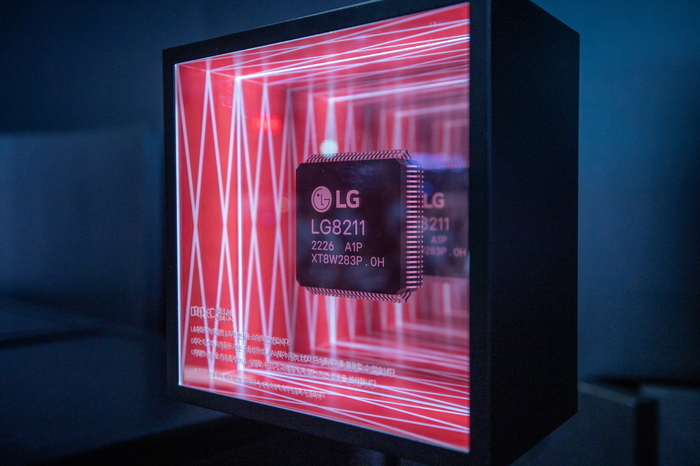
LG Electronics is rapidly scaling the application volume of its proprietary semiconductor designs in home appliances.
The company is establishing a virtuous cycle of increasing the adoption of self-developed semiconductors and enhancing appliance performance through operational data.
The 'DQ-C' series, an AI semiconductor for home appliances developed by LG Electronics' System-on-Chip (SoC) Center, surpassed 1 million units in appliance applications last year. This marks a more than tenfold increase from the 100,000-unit level two years ago. This year, the volume is expected to grow to several million units.
The number of appliance models equipped with the DQ-C series has also expanded to over 100, including washing machines, dryers, and air conditioners. The DQ-C series serves as the 'brain' of LG Electronics' appliances, handling AI control, voice recognition, and user behavior analysis.
The SoC Center, under the Chief Technology Officer (CTO), is a research organization responsible for designing and developing semiconductors applied across all LG Electronics products. It traces its roots to the KumSung Central Research Institute's Application-Specific Integrated Circuit (ASIC) Center, established in 1992.
Similar to Apple, LG Electronics develops specialized semiconductors for its home appliances and outsources production to foundry partners. Representative products from the SoC Center include the DQ-C series and the 'Alpha 9' and 'Alpha 11' processors used in OLED TVs.
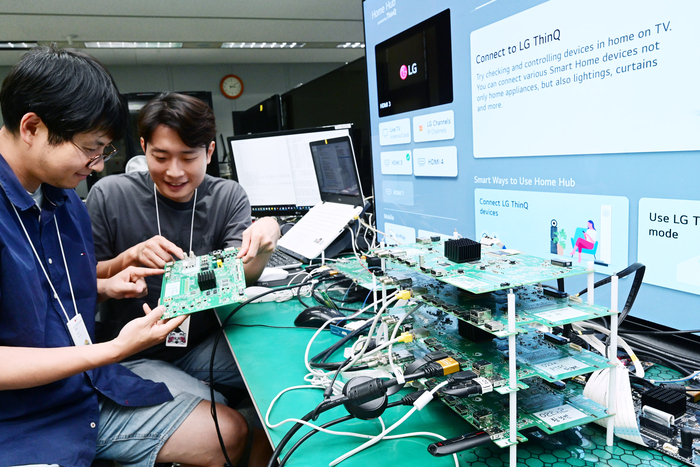
As AI features applied to home appliances—such as generative AI and AI algorithms—continue to expand, customized AI semiconductor technology has emerged as a key factor determining product competitiveness. LG Electronics' SoC Center is internalizing semiconductor design capabilities, serving as the foundation for differentiating home appliance performance.
With the shipment volume of the DQ-C series increasing to the millions, LG Electronics can reliably secure large-scale data generated from various home appliances. By systematically analyzing data processed by devices and product operation algorithms, and reflecting these insights in next-generation chip designs, the company can simultaneously enhance both semiconductor and home appliance performance, according to analysis.
LG Electronics plans to strengthen its semiconductor design capabilities for key home appliances and TVs, aiming to secure technological leadership in the home appliance sector. The company intends to implement differentiated home appliance features compared to competitors and ensure security as well.
LG Electronics is expected to expand its semiconductor domain into the robotics sector, following home appliances. Robotics is a business the company is fostering as a new growth engine. Since processors that process and control real-time data and perform AI computations are crucial in robotics, it is highly likely that LG will develop semiconductors optimized for robots in-house.
A semiconductor industry insider stated, “As LG Electronics' AI semiconductor shipments increase, the company can accumulate home appliance competitiveness based on data.” They added, “If LG develops semiconductors for robots following home appliances, it will enhance the completeness of the LG Electronics ecosystem.”
