




Samsung Electro-Mechanics is expanding its manufacturing capacity for artificial intelligence (AI) semiconductor package substrates, backed by direct capital investments from global tech giants including Nvidia. The move highlights a growing trend among leading Big Tech firms to secure dedicated production lines to ensure a stable supply of high-end substrates.
According to industry sources on Oct. 22, Samsung Electro-Mechanics will build out new package substrate facilities at its Sejong manufacturing complex in South Korea through a joint investment structure with Nvidia and other major tech companies. Nvidia is reportedly injecting around KRW2 trillion, while another Big Tech firm is committing approximately KRW1 trillion. By underwriting a substantial portion of the capital expenditure, these customers aim to establish dedicated production lines and lock in a guaranteed supply of critical components.
The joint investments form part of a broader KRW4.27 trillion capacity expansion announced by Samsung Electro-Mechanics last month for its flip-chip ball grid array (FC-BGA) manufacturing site in Sejong. Nvidia and other Big Tech partners are financing a major share of the initiative. The news follows Samsung Electro-Mechanics' recent confirmation that it would construct dedicated manufacturing lines tailored specifically for Nvidia.
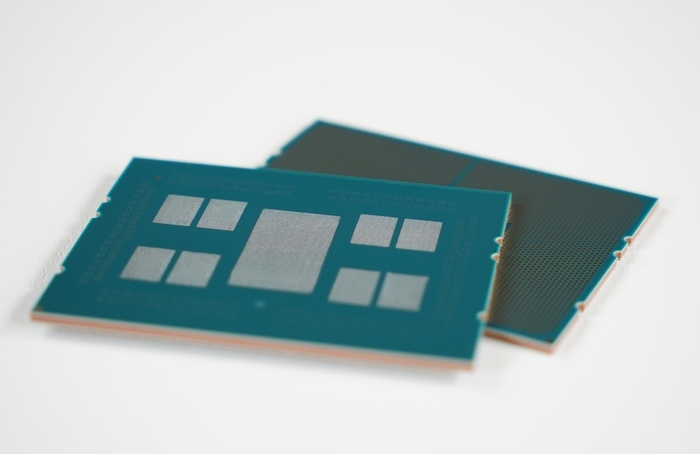
FC-BGA substrates serve as critical interconnect backbones, linking high-performance semiconductor dies to mainboards to route high-speed signals and deliver power. As the computing demands of AI accelerators surge, the volume of processed data rises exponentially, requiring denser interconnect routing. This trend is driving package substrates to grow significantly larger in physical footprint and incorporate increasingly complex, high-layer count designs.
Manufacturing these advanced substrates, however, involves formidable technical barriers. As surface areas expand and layer counts climb, manufacturers must implement ultra-fine circuitry to minimize signal loss while mastering planarity control to suppress thermal warpage. In addition, substrates must effectively mitigate power noise during high-speed computing cycles to maximize power delivery efficiency.
With the rapid architectural evolution of AI hardware, the strategic value of high-performance substrates has escalated, sparking explosive demand that far outpaces current industry supply. At the company's annual shareholders meeting in March, Samsung Electro-Mechanics CEO Chang Duck-hyun noted that customer demand was outstripping capacity by more than 50%, prompting active plans for supplementary investments and facility expansions.
Only a handful of suppliers worldwide possess the engineering caliber required to manufacture high-end FC-BGA substrates reliably. Given the high barrier to entry and the lengthy timeline required to ramp up capacity, global Big Tech players are increasingly opting to directly co-fund dedicated production facilities to cement long-term supply agreements.
