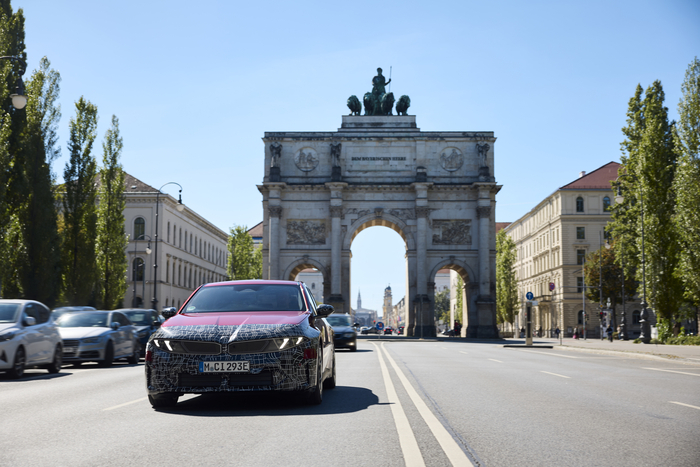
BMW is extending its advanced driver assistance technology beyond highways to urban roads. The enhanced system, described as “Level 2++,” is set to make its commercial debut in Germany in early 2027.
The company said on Nov. 2 that it would begin rolling out its next-generation Motorway and City Assistant package in 2027, providing continuous driving assistance across highways, rural roads and city streets.
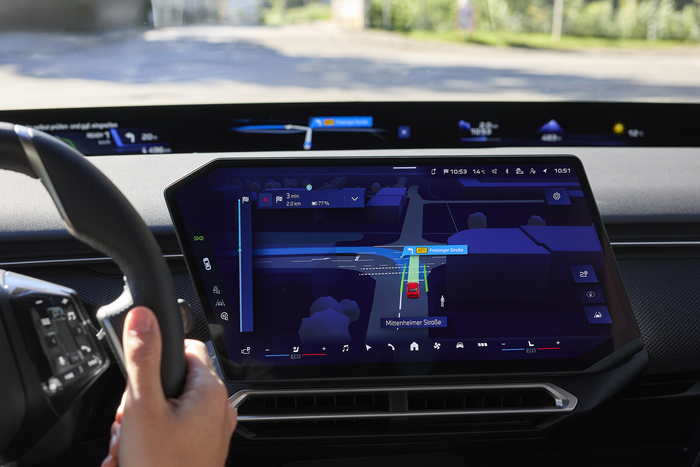
Linked to routes in BMW Maps, the system actively handles complex urban maneuvers, including left and right turns at intersections, lane changes, right-of-way decisions and roundabouts. These capabilities build on existing traffic-light recognition and automatic stopping and starting functions, allowing assistance to continue as the vehicle moves between different road types.
BMW Symbiotic Drive enables shared control between the driver and the vehicle. Rather than immediately disengaging when the driver turns the steering wheel or operates the pedals, the system factors in the driver's gaze and intended inputs to maintain assistance more naturally.
Despite the “Level 2++” label, the system remains classified as SAE Level 2, meaning the driver must monitor the road and remains responsible for driving. An interior camera continuously monitors driver attention. BMW said the system has already passed an independent on-road assessment against the latest United Nations Economic Commission for Europe (UNECE) requirements for Driver Control Assistance Systems (DCAS), with formal approval expected in early 2027.
The high-performance sensors and computing hardware needed for urban driving assistance will be installed as standard across all trim levels of the Neue Klasse-based new iX3 and iX4, as well as the 3 Series, 7 Series and X5. Owners will be able to activate the feature after delivery through an over-the-air (OTA) software update.
A South Korean rollout is expected to follow the German launch, with timing dependent on regulatory updates and localization. The South Korean government is working to incorporate DCAS requirements into domestic regulations in line with the UN World Forum for Harmonization of Vehicle Regulations (WP.29). Administrative procedures and the establishment of safety certification processes, however, typically create a lag before local implementation.
Integration with TMAP-based navigation data and on-road validation for local conditions—including unprotected left turns and dedicated U-turn lanes—will also be essential.
“Since the relevant hardware is being installed as standard in key new BMW models sold in South Korea, vehicles already delivered are expected to be eligible for OTA activation once regulations and map refinements are in place,” an automotive industry representative said. “A local rollout could materialize between the second half of 2027 and the first half of 2028.”