




The European Union's cybersecurity chief has warned that household appliances could be the next hacking targets after attacks on supermarket refrigeration systems. His call for manufacturers to invest in security from the design stage adds urgency for South Korean companies exporting connected appliances to Europe.
“Today it was refrigerators, but tomorrow it could be routers, and the day after, household appliances,” Juhan Lepassaar, executive director of the EU Agency for Cybersecurity (ENISA), warned in Brussels on Nov. 10.
Every service people depend on has a digital component and could be hacked if left unprotected, he said. In the worst case, attacks could disrupt essential services such as policing, firefighting, hospitals and transport. He added that state-linked actors from countries including China, Iran and North Korea were targeting European businesses.
“Security must not be an afterthought,” Lepassaar said, urging manufacturers to build protection into products from the outset. He argued that every incident could be prevented, but that security was not cheap—the question was whether companies were prepared to make the necessary investment. ENISA has also described artificial intelligence in a report as a “force multiplier” that accelerates the search for vulnerabilities.
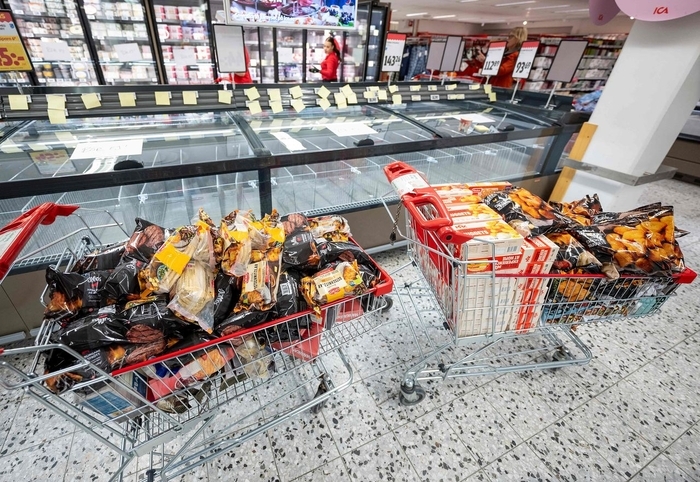
The warning follows a wave of attacks on refrigeration systems across Europe. Overnight on Oct. 11-12, attackers remotely took control of refrigeration controllers at roughly 700 supermarkets and other retail outlets in France, causing temperatures to soar and triggering at least 15 fires. By early November, at least 12 countries, including Belgium, Sweden and Ireland, had been affected. Attackers exploited internet-exposed remote management devices and older equipment that had not received security patches.
For South Korean appliance makers, the challenge is that these calls for security by design and greater investment are becoming regulatory requirements. Under the EU's Cyber Resilience Act (CRA), manufacturers have been required since September to report actively exploited vulnerabilities and severe incidents within 24 hours of becoming aware of them. Products already sold are also covered. Violations can carry fines of up to €15 million or 2.5% of global annual revenue, whichever is higher. The act's full security-by-design requirements take effect in Dec. 2027.
South Korea's response is still in its early stages. On Nov. 11, the Ministry of Science and ICT held a meeting with chief information security officers (CISOs) from cold-chain companies, which handle temperature-controlled storage and transport. The ministry recommended urgent measures, including using virtual private networks (VPNs) for remote access and changing default passwords.
However, government-backed Internet of Things (IoT) security certification remains largely voluntary and focused on testing before products reach the market. The same limitations apply to both midsize appliance manufacturers and major companies that have expanded rental businesses built around remote device management.
“Appliance security is likely to become a condition for market access rather than simply a cost,” an appliance industry source said. “Investment is needed in independent safeguards that protect core functions such as temperature and power even if a network is compromised, update policies that cover discontinued products, and controls over remote management access.”
