




President Lee Orders Overhaul of Cybersecurity Response System
Organizational Structure and Authority Adjustments to Be Detailed
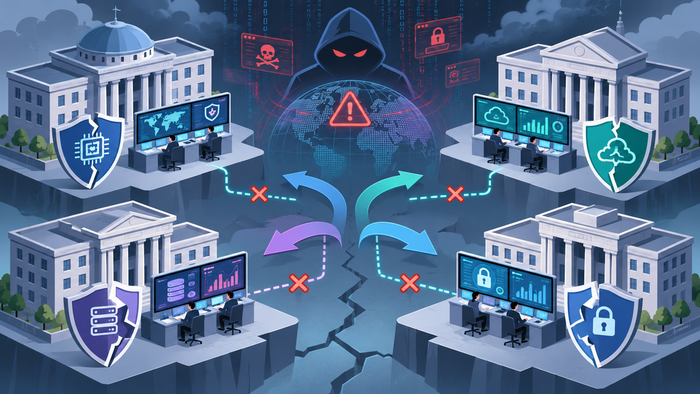
The South Korean government has begun preparations to establish a governmentwide cybersecurity control tower, dubbed a “cybersecurity czar.” The move follows President Lee Jae-myung's call earlier this month to overhaul the country's cybersecurity response system, during which he explicitly mentioned the need for a cybersecurity czar.
Relevant ministries and agencies have begun drafting their own improvement proposals. Based on these proposals, the government is expected to hold interagency consultations to work out the details of the organizational structure and adjustments to authority.
According to industry sources on Nov. 17, relevant government agencies, including the Ministry of Science and ICT (MSIT) and the National Intelligence Service (NIS), are preparing individual review proposals ahead of discussions on establishing a cybersecurity czar.
The proposals are expected to address difficulties encountered in implementing current cybersecurity policies and responding to incidents, areas requiring interagency cooperation, and measures to improve the existing system.
The discussions are a follow-up to Lee's instruction at a Cabinet meeting on Nov. 3 to actively consider establishing a cybersecurity czar. Lee emphasized the need for a strong and effective governmentwide organization capable of overseeing and coordinating security functions currently dispersed across the public and private sectors.
Although the National Security Office under the presidential office already oversees national cybersecurity policy, criticism has persisted over its limited ability to coordinate security functions distributed among different ministries and agencies. The discussions appear to reflect concerns that a stronger governmentwide coordination system is needed.
Under the current structure, the National Security Office oversees national cybersecurity policy, while the NIS is responsible for the government and public sectors, the MSIT handles the private sector, and financial authorities oversee the financial sector. The Personal Information Protection Commission (PIPC) separately conducts investigations and imposes sanctions in cases involving personal information leaks.
The central objective of the proposed overhaul is to strengthen cooperation among ministries and agencies responsible for cybersecurity and ensure consistency in national-level policy formulation and implementation.
Options under consideration include expanding and restructuring the Office of the Secretary for Cybersecurity under the third deputy director of the National Security Office, adjusting the functions and authority of relevant ministries and agencies, and establishing a separate agency dedicated to cybersecurity.
However, the process remains at an early stage, with individual ministries and agencies still preparing their review proposals. The specific direction of the organizational restructuring is expected to be determined through future interagency consultations.
“Reallocating responsibilities and authority among government ministries will not be easy in practice because each ministry will be reluctant to relinquish its existing powers,” said Kim Seung-joo, a professor at Korea University. “It is necessary to develop measures that can create synergies while preserving each ministry's response systems and expertise.”
Some observers argue that because Lee personally initiated the proposal to establish a cybersecurity czar, he should maintain his interest in the issue and directly oversee the restructuring process.
They believe that the president must treat cybersecurity as a major policy priority and demonstrate a clear commitment to implementation to encourage active cooperation among relevant ministries and bring about substantive institutional improvements.
“Presidential policy commitment is important in reforming cybersecurity governance,” said Yeom Heung-youl, professor emeritus at Soonchunhyang University. “Measures that can be implemented immediately should be pursued first, while medium- and long-term organizational restructuring should be reviewed in stages, taking practical circumstances into account.”
