




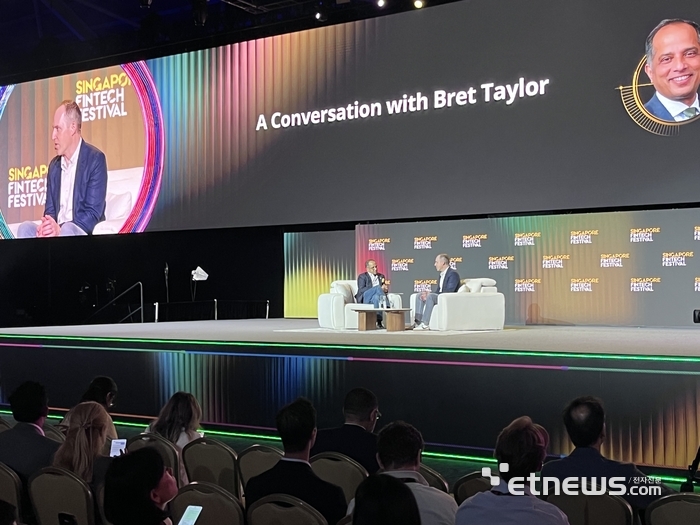
The era of 'AI agents' that perform purchases and payments on behalf of consumers is dawning. As AI begins to handle customer service and operations for financial institutions, technological changes in the global financial industry are accelerating.
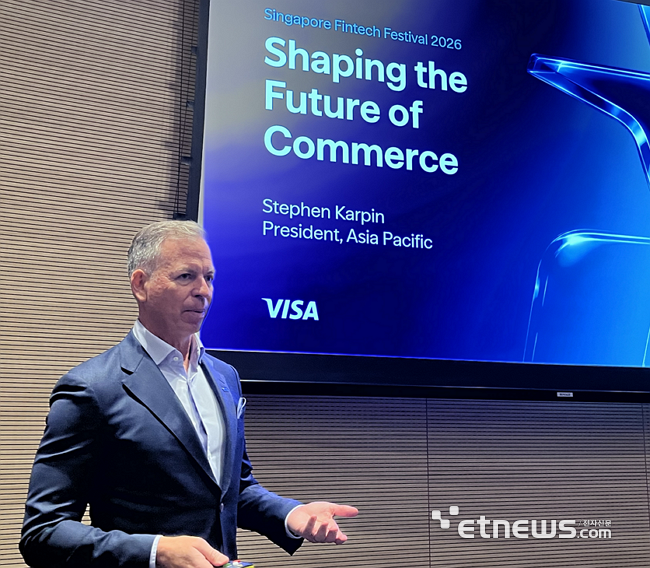
Stephen Kaplin, Visa's Asia-Pacific Regional Head, emphasized AI agent payments and stablecoins as technologies that will transform the next-generation commerce market during his speech at the 'Singapore FinTech Festival (SFF) 2026' in Singapore on the 18th.
He stated, “As services where AI makes payments on behalf of users begin, it will be necessary to verify not only the security of payments but also the user's identity, purchase intent, and delegated authority.” He added, “On-chain-based digital value, such as stablecoins, is also changing the way funds move globally.”
Visa forecasts that AI agents will handle 25-30% of all commerce by 2030. The process involves consumers conveying purchase conditions to AI, which then performs tasks from product comparison to ordering and payment. Repetitive transactions, such as utility bill payments, subscriptions, and grocery purchases, are expected to lead this expansion.
To support this, Visa is developing payment technology that verifies consumer purchase intent. Card information is converted into tokens, enabling payments without exposing actual card numbers.
In financial institutions, AI is expanding its role to directly communicate with customers and provide financial services.
Bret Taylor, OpenAI Board Chair, emphasized that financial companies should integrate AI from the very first step of customer interaction with banks, moving beyond adopting AI for individual tasks.
“The AI is not a competitive advantage but a necessity to maintain competitiveness,” Taylor stated. “Within the next 4-5 years, banks will need to implement AI at both customer touchpoints and internal operations to stay competitive.”
In practice, U.S. mortgage company Rocket Mortgage has automated the initial loan application process—verifying customer income, assets, and credit information—using AI agents, followed by human consultations.
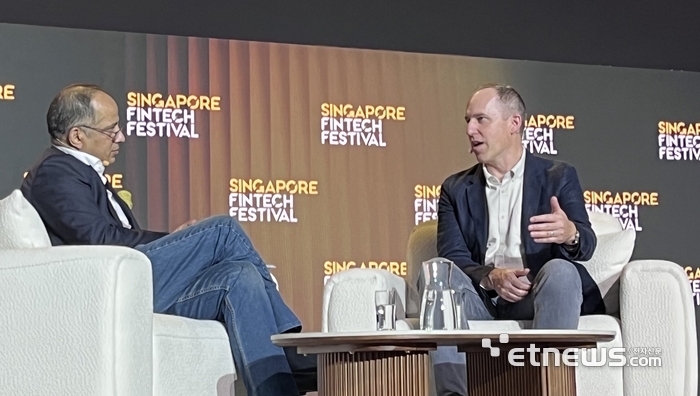
Errors and accountability issues arising from AI handling financial tasks were identified as key challenges. Chairman Taylor explained that rather than completely eliminating the possibility of AI generating incorrect responses, it is essential to establish a control system to detect and correct errors. He emphasized that human intervention should occur when necessary.
The cost structure for financial institutions adopting AI is expected to change. While costs were previously paid based on software usage fees or AI processing volume, a model where payments are made according to actual business outcomes is likely to expand in the future.
Chairman Taylor stated, “If an AI agent fails to successfully complete a task, costs should not be charged based on token usage,” and predicted that a significant portion of the software industry will transition to performance-based pricing models within the next 4-5 years.
Singapore=
