

Xi Proposes Four Principles, Including Mutual Respect and Peaceful Coexistence, Stresses Energy Supply Chain Stability
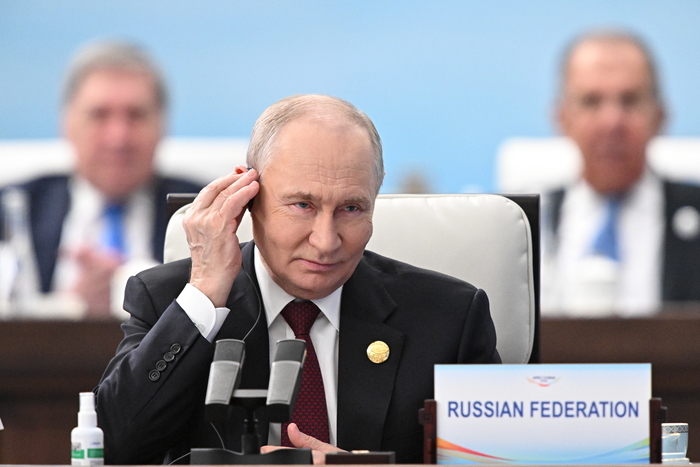
Putin Cites Shared Interests in Resolving Ukraine War, Emphasizes Joint Responsibility for International Peace
Lee and Putin Discuss North Korea's Nuclear Program in Separate Meeting, Agree on Need to Ease Korean Peninsula Tensions
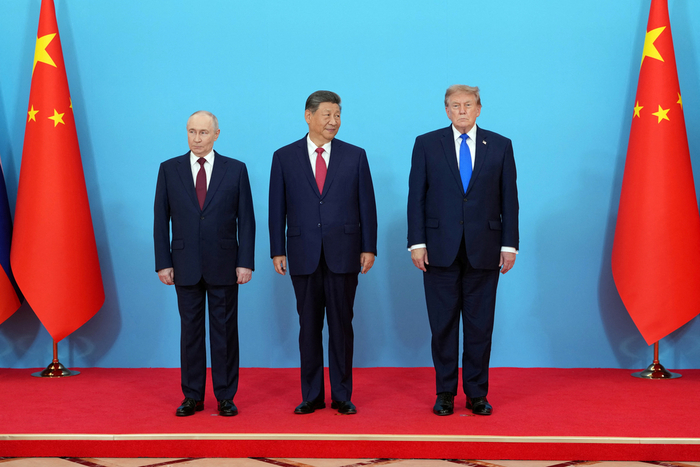
The leaders of the United States, China and Russia held their first-ever trilateral summit in Shenzhen, China, on Nov. 19. U.S. President Donald Trump called for cooperation among the three countries to reduce nuclear weapons and prevent nuclear proliferation. Chinese President Xi Jinping compared nuclear weapons to a “sword of Damocles” hanging over humanity and called for their complete prohibition and thorough elimination.
Trump, Xi and Russian President Vladimir Putin met at Qilin Villa in Shenzhen on the sidelines of the Asia-Pacific Economic Cooperation (APEC) summit. Before the trilateral meeting, Trump held separate bilateral talks with Putin and Xi.
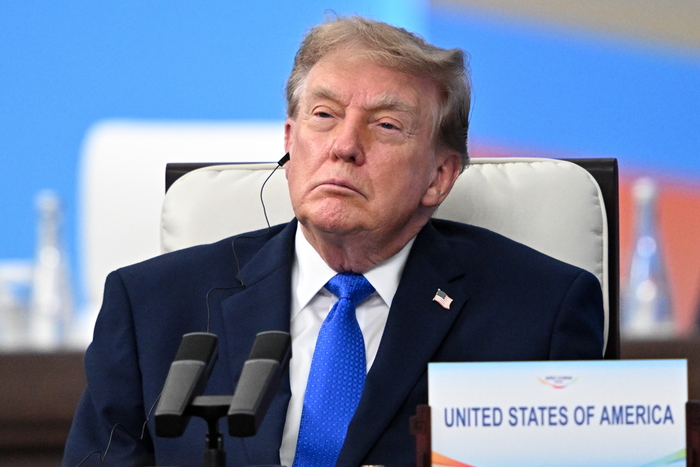
In his public opening remarks, Trump said the three countries could discuss ways to reduce the number of nuclear weapons worldwide and lower the risk of their use. He also emphasized the need for trilateral cooperation to prevent nuclear weapons from spreading to other countries. The New Strategic Arms Reduction Treaty (New START), which had limited deployed strategic nuclear weapons in the United States and Russia, expired on Feb. 5.
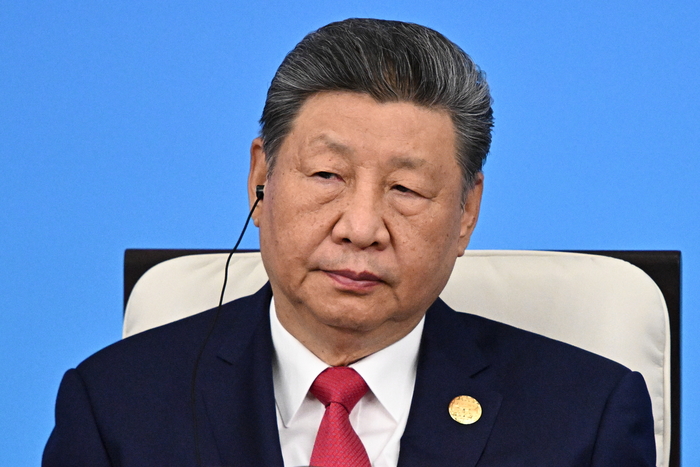
Xi outlined four principles that major powers should uphold to maintain world peace: mutual respect, peaceful coexistence, cooperation for mutual benefit, and dialogue and consultation. He said countries should respect one another's sovereignty and territorial integrity, their chosen social systems and development paths, and their core interests. He emphasized that sensitive issues should be communicated in advance and that countries should avoid crossing one another's “red lines.”
Xi referred to the so-called “Thucydides Trap,” the idea that competition between a rising power and an established power can lead to war, saying whether conflict can be avoided depends on the choices made by major powers. He stressed that there can be no winners in a nuclear war and that such a war must never be fought, urging compliance with the Treaty on the Non-Proliferation of Nuclear Weapons (NPT).
On economic issues, Xi proposed expanding trade cooperation by linking the three countries' respective strengths in resources, manufacturing and consumption. He said they should avoid supply chain disruptions and work together to maintain the stability of energy supply chains and global energy markets. Regarding international conflicts, he said the three countries should encourage the parties involved to continue dialogue at the negotiating table and seek solutions through political and diplomatic means.
Putin said the three countries have overlapping interests in resolving conflicts, including the war in Ukraine, and emphasized their shared responsibility for maintaining international peace and security. Trump said he had discussed the war in Ukraine during an earlier U.S.-Russia bilateral meeting and that progress had been made, but he did not disclose specific details.
Issues concerning the Korean Peninsula were discussed during a separate meeting between South Korean President Lee Jae-myung and Putin on Nov. 18. According to a senior presidential office official, the two leaders met for about 10 minutes on the sidelines of the APEC welcome dinner and discussed North Korea's nuclear program. They agreed on the need to prevent the situation on the Korean Peninsula from deteriorating and to ease tensions.