






Aiming to Replace Even Manual Labor
Technical Evaluation Next Year, Deployment by 2028
Implementation Would Set New Milestone in Manufacturing
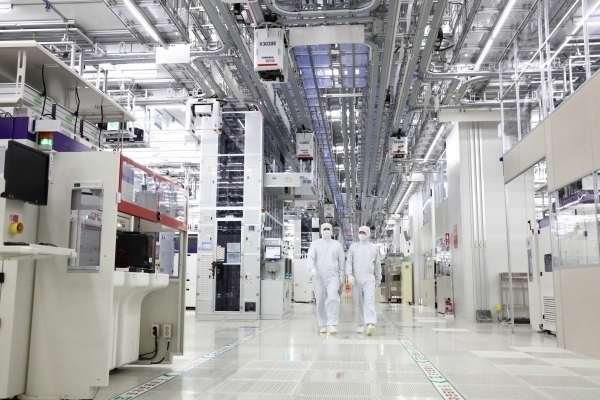
Samsung Electronics is deploying robots in its semiconductor factories. This is an attempt to replace even tasks that currently require human intervention with robots, as automation in semiconductor factories has already reached a significant level.
It remains to be seen whether Samsung Electronics will successfully implement AI-based unmanned factories and further drive the growth of the domestic robotics industry.
According to industry sources on the 26th, Samsung Electronics' Device Solutions (DS) Division has confirmed the establishment and operation of a 'Robotics Team' under the Global Manufacturing & Infrastructure Headquarters. Vice President Lee Seok-won has been appointed as the team leader. The Robotics Team is understood to be responsible for developing robot technologies applicable to semiconductor factories and introducing them to actual production sites.
Samsung Electronics plans to collaborate with external robotics specialists through the Robotics Team to verify technologies and apply them to the field. It is understood that the company has established a roadmap to select partners within the year, conduct technical evaluations next year, and deploy robots on-site starting in 2028. Multiple domestic robotics companies are preparing to participate in the partner selection process.
The establishment of a dedicated organization is reportedly aimed at minimizing the remaining manual tasks in semiconductor factories. While key production processes, such as wafer transfer, are largely automated, human labor is still required for equipment maintenance, parts supply, and facility management.
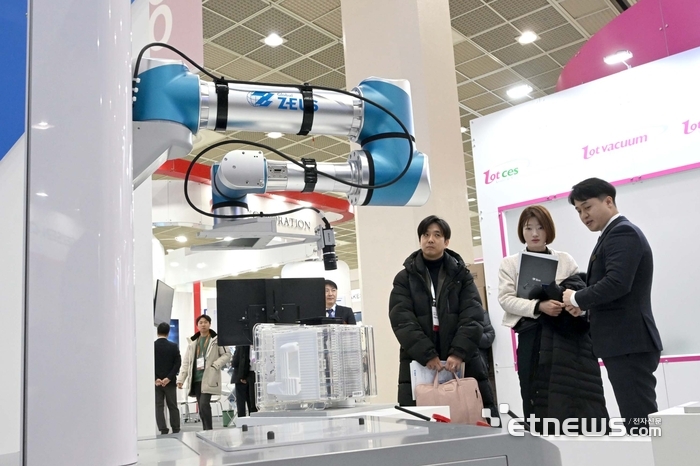
Samsung Electronics is interpreted to be expanding automation by applying unmanned transport vehicles (AGVs), autonomous mobile robots (AMRs), robotic arms, and similar technologies. This extends beyond semiconductor manufacturing to transforming production line operations and maintenance processes.
A semiconductor industry insider stated, “Component and consumable replacement remains an area not yet automated.” They added, “While existing overhead hoist transports (OHTs) automatically transport wafers, AGVs and AMRs will handle moving parts and materials required for equipment maintenance.”
The adoption of robots also aims to enhance productivity and safety. Automating repetitive material transport and equipment maintenance can reduce task time and minimize equipment downtime. It also decreases the need for human workers to handle hazardous materials or perform tasks in dangerous environments.
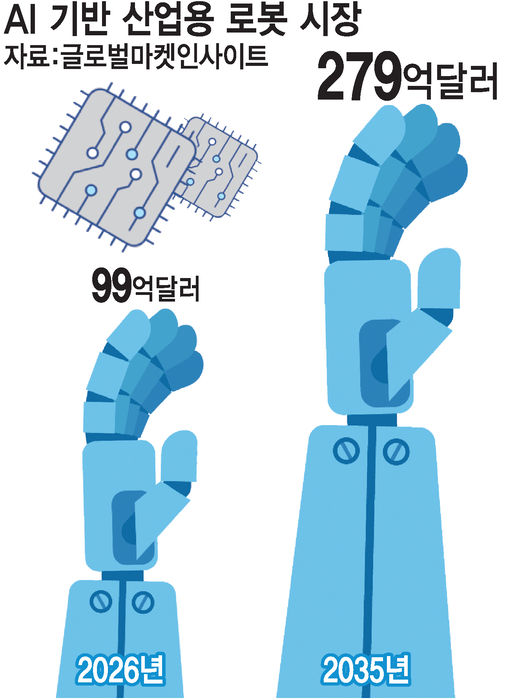
The extent to which robots can be applied is drawing attention. According to industry sources, semiconductor factories have achieved 90% automation in the front-end process (semiconductor device formation) and 80% in the back-end process (semiconductor packaging). If Samsung Electronics fills the remaining 10% of the front-end process and 20% of the back-end process with robots, it is expected to set a new milestone in manufacturing sites.
Samsung Electronics is anticipated to accelerate the unmanned transformation of semiconductor factories through its Robotics Team. In March, the company announced plans to convert domestic and international production plants into AI autonomous factories by 2030, utilizing AI and robotics.
Another semiconductor industry insider noted, “Previously, robotics and semiconductor automation technologies were researched within the Production Technology Research Institute, but this time, the establishment of a separate commercialization-focused organization outside the institute is noteworthy,” adding, “It reflects a strong commitment.”
However, as unmanned operations are directly linked to employment issues, determining the appropriate balance will be a key challenge.
