






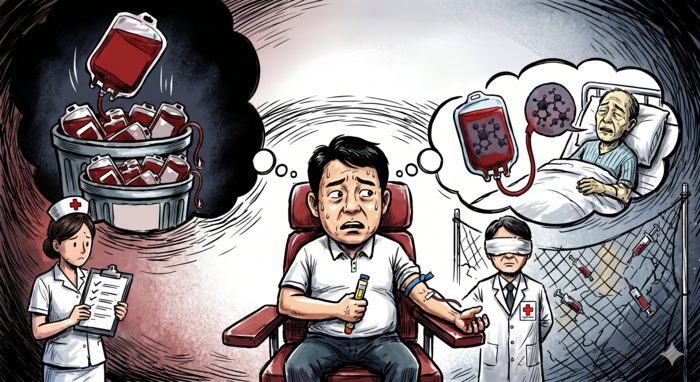
While the number of users of GLP-1 receptor agonists for diabetes and obesity, such as Wegovy and Mounjaro, is rising rapidly, it has been found that blood donation sites lack separate questionnaire items or guidance regarding these medications. If donors voluntarily report that they received an obesity treatment before donating, the blood is discarded; however, if they do not disclose it beforehand, the blood can be used for transfusions. Critics point out that more meticulous blood management is required.
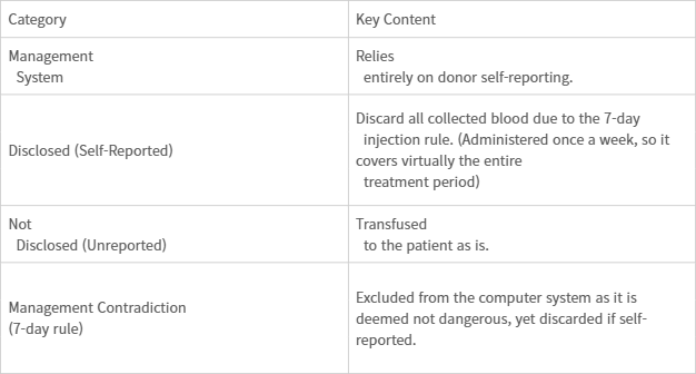
According to reporting by the Electronic Times, the Korean Red Cross has excluded weight-loss drugs from its management list on the grounds that they are not dangerous, yet it mechanically discards blood that is voluntarily reported under the general regulation of 'injection administered within the last 7 days.'
The Red Cross applies a standard to blood centers nationwide to discard blood collected within 7 days of administering the latest diabetes or obesity treatments. However, there is no way to verify the administration of weight-loss drugs other than voluntary reporting by the donor. While there is a question in the medical questionnaire asking if the donor has received any injections, Wegovy and Mounjaro are self-injections, so donors often perceive them differently from general injections.
The Red Cross restricts blood donation by receiving prescription data electronically from the Health Insurance Review and Assessment Service (HIRA) only for prohibited blood donation drugs. If a prescription for a related drug is confirmed after donation, it is recalled and discarded. However, because weight-loss drugs are not prohibited blood donation drugs, they are not subject to this electronic linkage.
Ultimately, it is a structure in which it is difficult to verify whether an obesity treatment has been administered unless the donor discloses it themselves. If a donor receives an obesity drug and does not report it, the blood can be released as is and transfused into a patient. Conversely, even with the same blood, if the administration is reported, it is discarded according to the current standard of 'discarded within 7 days of administration.'
However, the scientific evidence that GLP-1 receptor agonists are dangerous to transfused patients is unclear. The American Red Cross guides that users of Ozempic and Mounjaro can also donate blood as long as their underlying diseases are controlled. These classes are also missing from South Korea's list of prohibited blood donation drugs.
Critics point out that rather than a uniform suspension of GLP-1 receptor agonists, a standard tailored to evidence needs to be designed. Jegal Dong-wook, professor of laboratory medicine at Seoul St. Mary's Hospital, explained, “Blood donation is possible even when taking diabetes medications, and Mounjaro and others are also prescribed as diabetes treatments,” adding, “The United States and the United Kingdom allow blood donation despite the administration of related drugs, and Ireland has a system in place where it is possible 8 weeks after administration.”
The gap in guidance and medical questionnaires surrounding drugs whose use has surged, like obesity treatments, is expected to increase the burden in connection with the blood supply shortage. According to National Assembly audit data, blood discarded after collection reached approximately 590,000 units from 2020 to August last year. As of the 18th of this month, the nation's red blood cell inventory stood at 5.2 days' supply, barely exceeding the appropriate standard (5 days' supply).
The Blood Services of the Red Cross stated that following the commencement of this paper's coverage, it would issue a notice to strengthen related public relations and thoroughly verify medical questionnaires.
A medical community official pointed out, “The Red Cross notice is at a level of strengthening guidance and questionnaire verification, but a stage is needed to revise the standards themselves for discarding or transfusing blood from people who received new drugs, or to establish separate questionnaire items and official guidelines.” The official followed up by saying, “The key is how to redesign the guidance and questionnaire system rather than the current system that relies on voluntary reporting.”