






Samsung SDI is entering a full-scale mass production phase after wrapping up extensive production line retooling at its U.S. and European plants. In response to the global electric vehicle (EV) slowdown, the Korean battery maker is implementing a flexible strategy to repurpose idle or underutilized automotive lines for energy storage systems (ESS) and new customer orders. This tactical shift is expected to bolster factory utilization rates as production ramps up through the second half of the year.
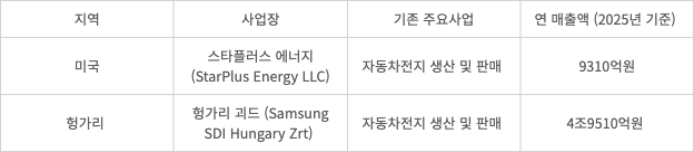
According to industry sources on July 5, StarPlus Energy--Samsung SDI's joint venture with Stellantis in the United States--is currently converting three out of the four lines at its first plant to produce ESS batteries. Notably, the plant's first lithium iron phosphate (LFP) line is slated to begin production this September, ahead of the previously anticipated fourth-quarter timeline. This line is set to manufacture 273Ah LFP ESS battery cells.
StarPlus Energy Plant 1 was originally designed entirely for EV battery production. However, with the EV market recovery taking longer than expected, Samsung SDI has strategically opted to pivot toward the fast-growing ESS market rather than leaving valuable production lines inactive. Industry trackers such as SNE Research and BloombergNEF (BNEF) project the North American ESS market to surge from 88 gigawatt-hours (GWh) last year to about 976 GWh by 2035.
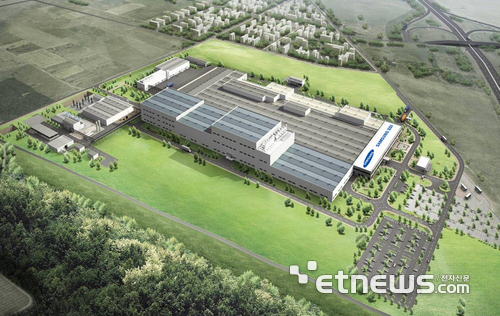
A similar production reshuffle is underway at Samsung SDI's European hub in God, Hungary. At God Plant 1, the company is retrofitting its existing four lines to produce prismatic batteries tailored for the Volkswagen Group. These lines are being converted to a “side-terminal” configuration to meet specific client requirements, effectively breathing new life into low-utilization lines for new high-volume orders.
Equipment setup for the first retooled line is mostly complete, and the company has reportedly advanced to the reliability sampling (DPV) phase. The side-terminal design places battery terminals on the side rather than the top of the prismatic cell. This layout optimizes upper space within the battery pack, offering advantages in energy density and cooling efficiency.
Meanwhile, at God Plant 2, equipment is being installed for Samsung SDI's first mass-production line of next-generation “46-phi” (46mm diameter) cylindrical batteries. Instead of building a brand-new facility, the company is maximizing efficiency by utilizing existing vacant space inside the Plant 2 structure. Following reliability testing for its primary customer, BMW, full-scale mass production is anticipated around October next year. The 46-phi cell is highly anticipated across the industry; while it presents greater manufacturing complexity than traditional 2170 cylindrical cells, its larger form factor delivers significantly higher energy output.
These line conversions are expected to significantly lift the company's factory utilization rates in the latter half of the year. During the first-quarter earnings call, Michael Choi, Vice President at Samsung SDI, noted, “Reflecting the impact of our capacity optimization efforts, the utilization rate of our Hungary plant is projected to rebound to over 70% in the second half.” The utilization rate for Samsung SDI's prismatic lines in Hungary had reportedly dipped to the 40% range during the fourth quarter of last year.