









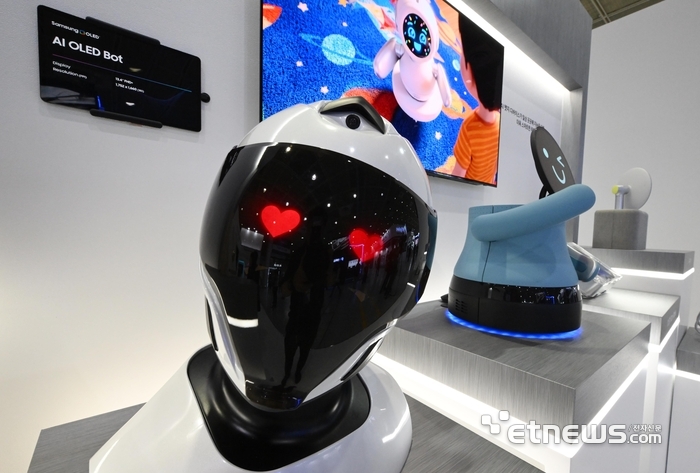
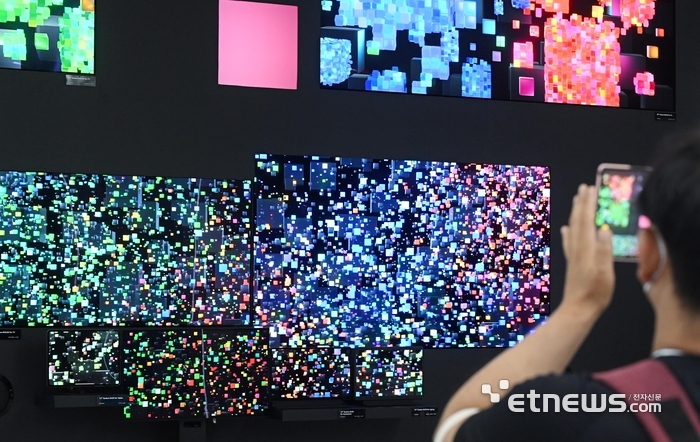
Korea's two leading display makers, Samsung Display and LG Display, showcased 2000-nit laptop OLED panels and OLED displays designed for humanoid robot faces, signaling the next front in the race for future display technology.
The K-Display exhibition, hosted by the Ministry of Trade, Industry and Energy and organized by the Korea Display Industry Association, opened on July 22 at COEX in Seoul's Samseong-dong district. A total of 142 companies and organizations, including Samsung Display and LG Display, set up 446 booths to present the direction of next-generation display technology.
Samsung Display drew significant attention with a prototype 14-inch “ultra-slim” Tandem OLED panel reaching 2000 nits of brightness, built using a rigid OLED (glass substrate) design. Brightness is one of the key benchmarks for display quality, and until last year, the maximum brightness for laptop OLEDs topped out at 1000 nits. Samsung Display commercialized a 1600-nit panel this year using its two-stack Tandem technology, and the new 2000-nit prototype signals the company is now pushing into uncharted territory.
LG Display also intensified the brightness race for laptop OLEDs, unveiling a 16-inch, 2000-nit “Tandem ATO” panel. ATO refers to LG Display's hybrid structure combining a glass substrate with a polyimide encapsulation layer. The design uses a thin glass substrate to reduce the overall thickness of the panel.
Both companies also drew crowds with OLED displays designed for humanoid robot faces, capable of showing expressions and messages. Samsung Display paired a 6.9-inch OLED panel, with a resolution of 2520x1080 (FHD+), with eye-tracking technology. LG Display, meanwhile, demonstrated a 7.2-inch, 1080x520 resolution plastic OLED (P-OLED) panel built into a robot face that appeared to greet visitors.
Samsung Display also showed off a range of automotive displays, including a prototype center fascia display featuring an 80mm “Big Hole” design, and a slidable OLED panel that can expand up to 15.5 inches. LG Display, for its part, unveiled a 27-inch 5K White OLED panel for office monitors for the first time.
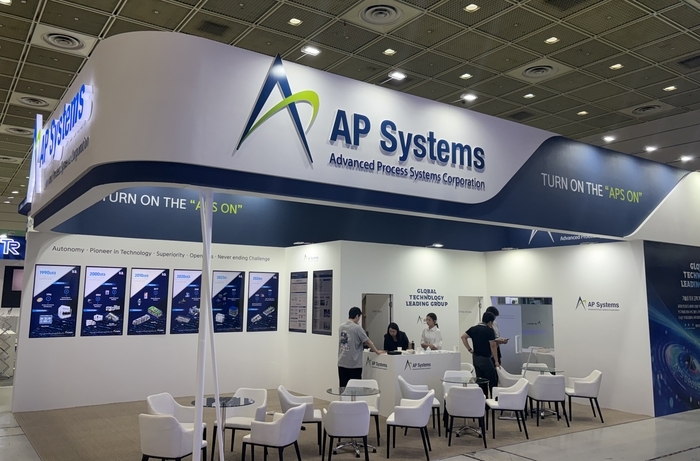
Materials, parts, and equipment suppliers in the display industry also showcased new technologies at the event. AP Systems presented atomic layer deposition (ALD) equipment being developed for high-mobility oxide (HMO) applications, along with excimer laser annealing (ELA) equipment for producing low-temperature polycrystalline silicon (LTPS), and solid-state laser annealing (SLA) equipment, which the company is positioning as a next-generation, high-efficiency alternative to ELA, with an eye toward Gen 8.6 fabs and beyond.
Merck highlighted its photoresist (PR) materials designed to enable higher-resolution displays. Using resolution enhancement technology (RET) as a complement to existing PR materials, the solution allows manufacturers to achieve sub-micrometer hole patterns using their existing equipment.
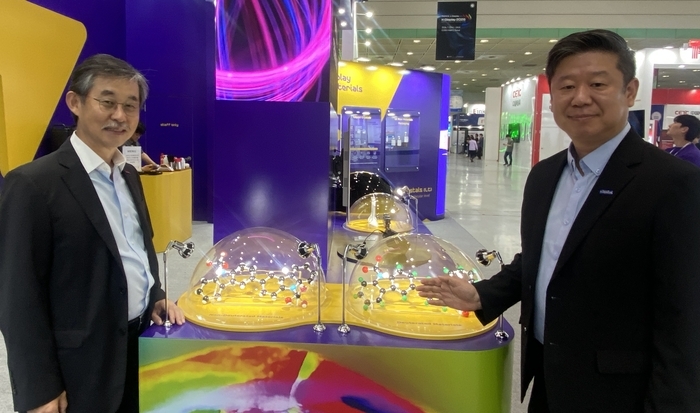
The event also featured procurement, technology, and trade consultation sessions aimed at fostering collaboration between companies and helping domestic materials, parts, and equipment suppliers expand into overseas markets.
“The government will move quickly to advance manufacturing AI transformation (M.AX) in the display industry, and will spare no effort in supporting regional ecosystem development and helping Korean companies bring their innovative new products to global markets,” said Choi Woo-hyuk, Director General for Advanced Industries Policy at the Ministry of Trade, Industry and Energy.
