








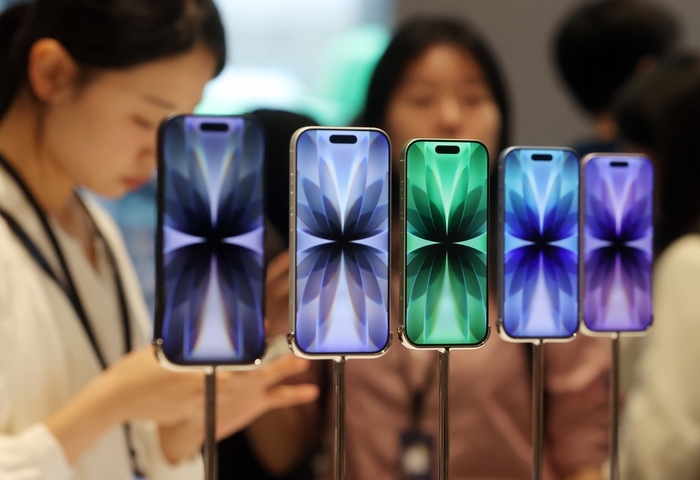
Apple has expanded its display panel inventory holding period since the second quarter to respond to steep increases in information technology (IT) component prices. Consequently, organic light-emitting diode (OLED) supply volumes from the South Korean display industry have also increased. As “chipplation,” which started in memory semiconductors, continues to spread, this trend is expected to persist.
According to industry sources on Aug. 9, Apple lengthened its display panel inventory holding period from four weeks to six weeks starting in the second quarter.
“Recently, raw material prices have been rising rapidly, and price pressure on other components is growing intense due to soaring memory semiconductor prices,” said a person familiar with the matter. “Apple increased its OLED panel inventory to stabilize prices.”
Extending the component inventory holding period requires securing a correspondingly larger volume of stock. In the case of displays, more OLED panels must be ordered than before to lengthen the inventory holding period.
The second quarter is traditionally an off-season for Apple's supply chain. Because Apple releases new iPhone models every September, component order volumes inevitably dropped significantly during the second quarter in normal years.
However, it is reported that panel order volumes were substantial this year as demand for the iPhone 17 series remained solid and the component inventory holding period was lengthened. According to market research firm Counterpoint Research, Apple's global smartphone shipments in the second quarter increased by 13% compared with the same period last year.
Apple expanded its panel inventory holding period to stabilize component prices. In June, Apple announced price hikes for some products, including the MacBook and iPad. Industry observers expect price adjustments for the iPhone, Apple Watch, and AirPods to be inevitable as well.
This is because manufacturing costs are rising under the impact of chipplation. Apple is reported to be attempting to pass on cost burdens by applying pressure on selling prices for OLED panels and other components.
However, analysts suggest that rather than simply pressing for selling price cuts, Apple is compromising by ordering larger quantities through the extension of its component inventory holding period. This is because raw material prices for OLED panels also continue to rise, making it impossible to lower selling prices recklessly. Increasing inventory has the effect of securing volumes in advance, allowing the company to pursue cost stabilization as well.
OLED panels manufactured by Samsung Display and LG Display are equipped in Apple iPhones. It is known that panel supply volumes from these companies increased due to the expansion of the inventory holding period in the second quarter. China's BOE also supplies OLEDs for iPhones, but the volume is small compared with South Korean companies.
“Because chipplation is not an issue that will be resolved in a short period, extending the inventory holding period will become a long-term policy rather than a temporary change,” an official in the display industry said. “As the inventory holding period is expected to be extended for the iPhone 18 Pro and Pro Max launching next month, an expansion in supply volumes for South Korean panel makers is anticipated.”
