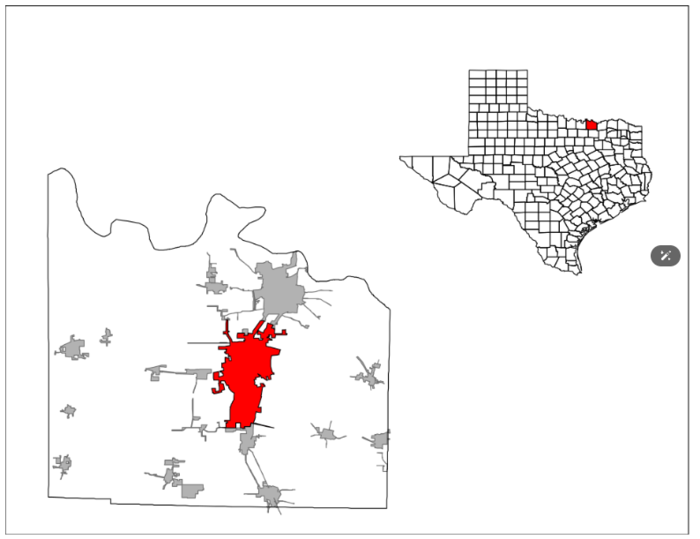


Enters Site Negotiations With Sherman
Up to $120 Billion for Six Semiconductor Fabs
Foundation for a Taiwan-Led Supply Chain
Competition for Customers and Infrastructure
Taiwan's TSMC, the world's largest semiconductor foundry, has selected Sherman, a city in northern Texas, as the site for its second major U.S. manufacturing hub and entered final-stage negotiations over the land. A direct confrontation with Samsung Electronics, which has treated Texas as its U.S. home base for the past 30 years through its operations in Austin and Taylor, appears inevitable.
According to U.S. media outlets, including the Dallas Business Journal, on Nov. 2, the city of Sherman in Grayson County, Texas, recently began site selection negotiations with TSMC to attract a semiconductor manufacturing facility worth tens of billions of dollars. Foreign media reported that Sherman is the frontrunner for TSMC's second U.S. manufacturing hub.
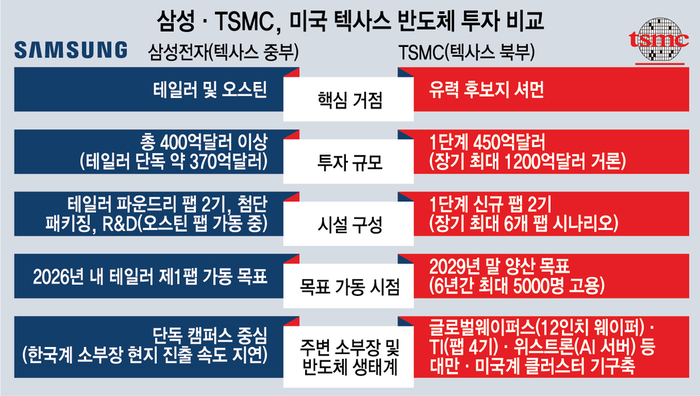
The massive project would begin with the construction of two semiconductor fabrication plants, or fabs, at an initial investment of $45 billion (approximately KRW62 trillion), followed by a potential long-term investment of up to $120 billion (approximately KRW165 trillion) in as many as six fabs.
Sherman in northern Texas, which TSMC has identified as a potential site, is only about a three-hour drive, or approximately 300 kilometers, from Samsung Electronics' campuses in Taylor and Austin in central Texas. The two companies' U.S. manufacturing operations, previously divided between Arizona for TSMC and Texas for Samsung Electronics, would effectively converge within a single state: Texas.
Competition between the two companies is expected to intensify across multiple fronts, including securing major Big Tech customers for artificial intelligence (AI) semiconductor supplies, recruiting skilled semiconductor engineers and construction workers in Texas, obtaining power and water infrastructure, and securing state government tax incentives.
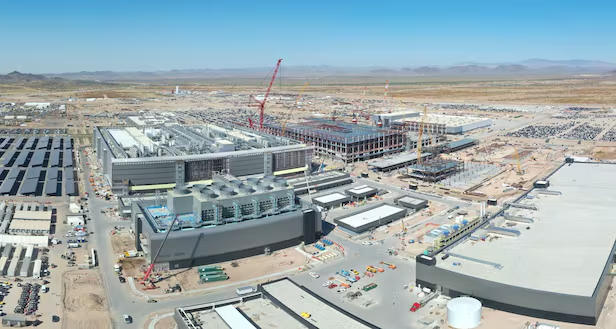
Samsung Electronics is currently investing more than $37 billion (approximately KRW51 trillion) in Taylor, central Texas, to build advanced foundry fabs, research and development (R&D) facilities and advanced packaging lines.
Internal development documents from the Texas state government obtained by local media provide specific figures illustrating TSMC's competing investment plans. The documents state that a “global company,” believed to be TSMC, plans to invest approximately $45 billion to construct two new semiconductor fabs, hire about 5,000 workers over the next six years and begin mass production by the end of 2029.
Industry observers point to an established, localized Taiwanese semiconductor supply chain as a key reason TSMC is considering Sherman in northern Texas rather than central Texas, where Samsung Electronics operates.
In Sherman, Texas Instruments (TI), a U.S. integrated device manufacturer (IDM) where TSMC founder Morris Chang once worked, is investing up to $40 billion to build four 300-millimeter wafer fabs, designated SM1 through SM4. Right next door, Taiwan's GlobalWafers is operating a 300-millimeter wafer plant built with an investment of several billion dollars. This would allow TSMC to procure 12-inch wafers, a critical base material, from a supplier located virtually across the fence.
In addition, Taiwan's KYEC, a semiconductor testing specialist and outsourced semiconductor assembly and test (OSAT) provider, is investing approximately $1.3 billion to establish its first U.S. facility in Fort Worth, not far from Sherman, to test Nvidia AI chips.
Unlike Samsung Electronics' Taylor fab, which must develop an ecosystem around its own campus, TSMC could quickly establish a Taiwanese AI semiconductor cluster across northern Texas, linking materials supplied by GlobalWafers, front-end manufacturing by TSMC and back-end processing by KYEC.
TSMC has also officially acknowledged the possibility of expanding into Texas.
During the company's third-quarter earnings conference call on Oct. 15, C.C. Wei, chairman and CEO of TSMC, said the company was considering further expansion in the United States to meet surging demand for AI chips.
“We have already dispatched a due diligence team to Texas to conduct all the necessary evaluations,” Wei said.