








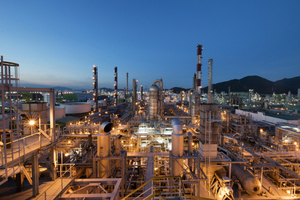
Lotte Chemical has reduced its chemical emissions by more than 60% over the past two years, accelerating its environmental, social and governance efforts.
According to Lotte Chemical's recently published 2025 ESG Report, chemical emissions totaled 228 metric tons last year. That was down 64.7% from 646 tons in 2023 and 57.6% from 538 tons in 2024.
The decline reflects the company's continued efforts to reduce the use of hazardous chemicals. Lotte Chemical operates a management system covering the full lifecycle of hazardous substances, including their use, manufacturing and transportation. It is also using its Lotte Chemical Management System, or LCMS, to lower hazardous-material content and develop substitute materials.
The volume of hazardous chemicals used by the company also fell. Lotte Chemical used 3.1 million tons of hazardous chemicals last year, down 9.6% from 3.42 million tons in 2024.
The company is continuing work to replace high-risk chemicals. It completed 15 high-risk chemical substitution projects last year and plans six more this year. Lotte Chemical intends to broaden the program by replacing high-risk raw materials and reagents with lower-risk alternatives or reducing their concentration.
The efforts also reflect tighter environmental requirements from global customers. Demand is rising—particularly in Europe—for companies to address not only a product's carbon footprint, but also the environmental impact of manufacturing and the management of hazardous chemicals throughout the production process.
Europe aims to reduce greenhouse-gas emissions by 90% from 1990 levels by 2040, adding pressure on suppliers to meet more demanding environmental standards.
Under its “Every Step for GREEN” strategy, Lotte Chemical is pursuing carbon-reduction-driven growth by 2030, net-zero emissions by 2050 and the creation of a green ecosystem across all of its sites.
The company aims to cut environmental-impact substances by 50% by 2030, compared with 2019 levels. It also targets sourcing 60% of its electricity from renewable energy by 2030 and 100% by 2050.
Industry observers expect chemical emissions to decline further this year. Lotte Chemical said the suspension of a 1.1 million-ton naphtha cracking center, or NCC, unit and the consolidation of production facilities during its Daesan restructuring could create additional downward pressure on emissions.
Lotte Chemical is pursuing a restructuring plan that would split off its Daesan complex and integrate it with HD Hyundai Chemical. The company aims to launch and begin operating the combined entity on Sept. 1.
“Major European customers are demanding lower carbon emissions and environmentally friendly products in line with global environmental regulations,” an industry official said. “Korean companies are accelerating their reduction efforts to meet those expectations.”
