








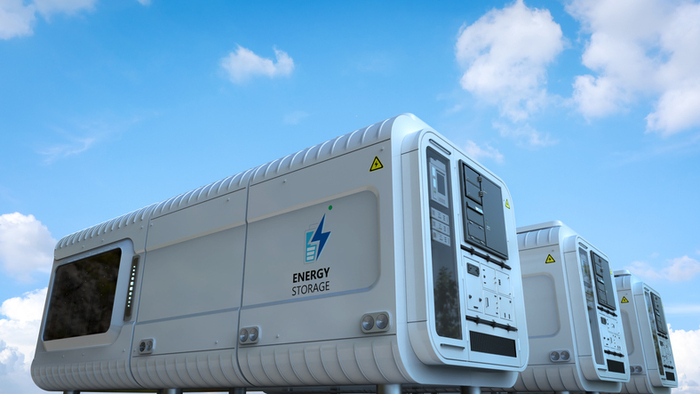
The rapid expansion of artificial intelligence data centers is driving strong growth in the U.S. energy storage system (ESS) market. As operators seek stable, reliable power for AI workloads, interest is also rising in long-duration energy storage systems capable of supplying electricity for more than 10 hours—well beyond the conventional two- to four-hour ESS format.
According to a market outlook released earlier this month by the Solar Energy Industries Association (SEIA) and Benchmark Mineral Intelligence, U.S. commercial and industrial (C&I) ESS installations reached a quarterly record of 1.8 gigawatt-hours (GWh) in the second quarter. The report expects roughly 6 GWh of additional installations in the second half of the year, citing rising data-center electricity demand as a key growth driver.
With Big Tech companies such as Meta and Google continuing to invest in AI data centers, the U.S. market for long-duration energy storage is expected to expand further. The U.S. Department of Energy has already been promoting the commercialization of long-duration ESS capable of delivering power for at least 10 hours, and has previously projected that 6 to 15 gigawatts (GW) of such systems could be installed by 2030.
South Korea's three major battery makers are also expanding their North American ESS businesses. LG Energy Solution is increasing its ESS production capacity in the region and converting part of its electric-vehicle battery production lines for ESS use. Samsung SDI is expanding production of lithium iron phosphate (LFP) batteries for ESS applications at the StarPlus Energy plant in Indiana. SK On has signed a five-year agreement to supply 9 GWh of batteries to NeoVolta Power beginning in 2027.
U.S. incentives for local manufacturing and tighter restrictions on China-linked supply chains are also creating opportunities for Korean battery manufacturers. To qualify for tax credits, U.S. ESS developers are accelerating efforts to source batteries and materials from non-Chinese suppliers.
Although LFP batteries remain at the center of Korean companies' North American ESS strategies, their technology portfolios are broadening as demand grows for systems that can provide electricity over longer periods. LG Energy Solution and Samsung SDI are pursuing next-generation ESS technologies, including sodium-ion batteries.
Sodium-ion batteries are seen as a potential next-generation option for long-duration storage because they may offer advantages over lithium-ion batteries in both material costs and resource availability. However, their commercial competitiveness, energy density, cycle life, and large-scale deployment timeline still require further verification.
“AI and data-center expansion are changing not only the size of the U.S. ESS market, but also the types of products and supply chains it requires,” an industry source said. “It will become increasingly important to secure local manufacturing capacity while building the technological competitiveness needed to address new demand, including long-duration storage.”
