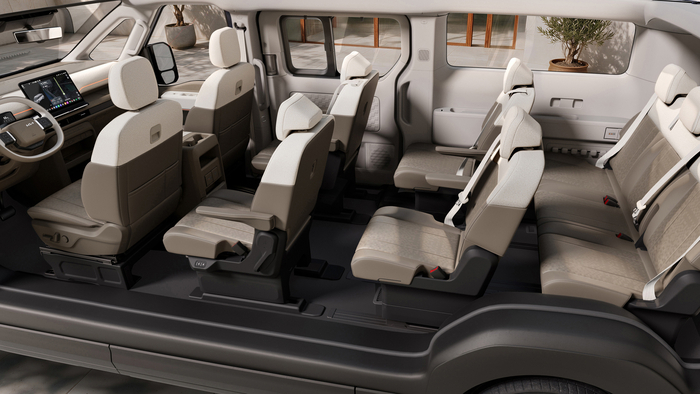







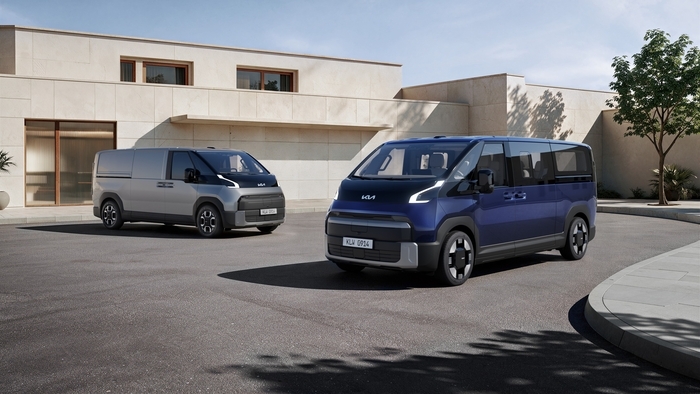
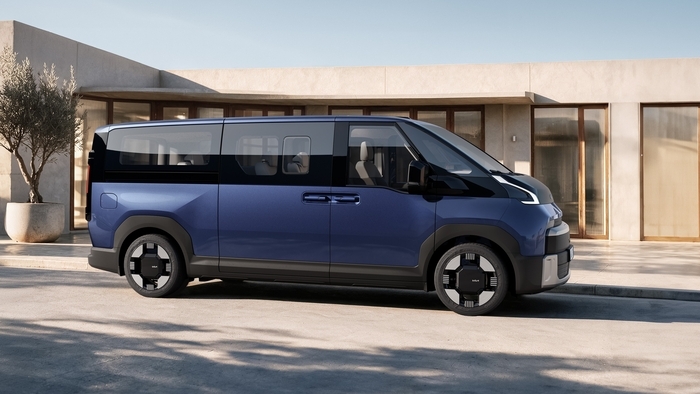
Kia on Sept. 14 unveiled its large purpose-built vehicle, the Kia PV7, at IAA Transportation 2026 in Hanover, Germany, targeting Europe's fast-growing electric commercial van market.
The PV7 is Kia's second dedicated electric purpose-built vehicle, or PBV, following the midsize PV5 introduced last year. PBVs are designed from the outset for specific commercial and mobility uses, including passenger transport, cargo delivery and fleet operations.
The PV7 will be available with two nickel-cobalt-manganese, or NCM, battery packs: a 71.5-kWh standard-range unit and a 96.2-kWh long-range unit. Kia said the long-range version can travel more than 460 km on a single charge under Europe's WLTP test cycle.
Based on an 800-volt electrical architecture, the PV7 supports DC fast charging at up to 350 kW. Under Kia's target specifications, the battery can be charged from 10% to 80% in the mid-20-minute range.
The van uses a front-mounted electric motor producing up to 200 kW and 420 Nm of torque. Kia said it plans to introduce an all-wheel-drive version later.
For the first time on a Kia vehicle, the PV7 features two charging ports: a front-mounted port supporting both AC and DC charging, and a rear-side port for AC charging. The arrangement is intended to make charging more convenient for commercial fleet operators.
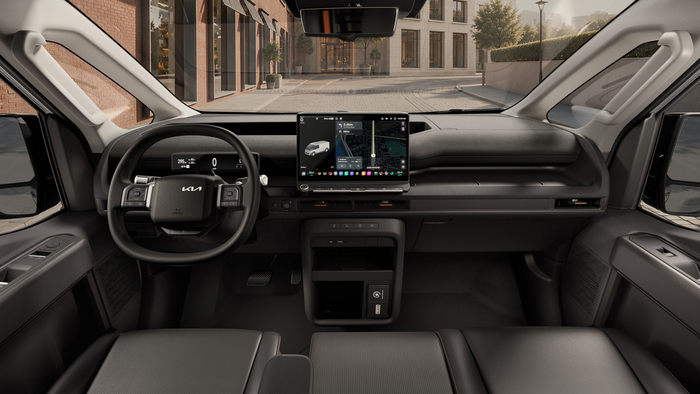
The vehicle also introduces Kia's software-defined vehicle, or SDV, approach to the large commercial van segment. It comes equipped with Pleos Connect, an Android Automotive OS-based infotainment platform, and Gleo AI, Kia's generative AI assistant.
Kia will also offer Pleos Fleet, a fleet-management system designed to help business customers operate and monitor vehicles more efficiently. Over-the-air software updates will allow the vehicle's capabilities to be updated after delivery.
Kia chose IAA Transportation in Hanover for the PV7's global debut as Europe has become one of the fastest-growing markets for low- and zero-emission light commercial vehicles. Demand is rising as European cities expand zero-emission zones and governments tighten carbon-emissions regulations.
The company is targeting business-to-business fleet contracts in Europe's large van market, which has traditionally been dominated by models such as the Ford Transit, Renault Master and Mercedes-Benz Sprinter. Kia plans to compete with a dedicated EV architecture and its software-defined vehicle platform.
“PV7 represents the next step in our journey toward personalized mobility,” Kia President and CEO Song Ho-sung said. “It will provide a comprehensive business solution that improves customer productivity, flexibility and long-term ownership value.”
Kia plans to launch the PV7 Passenger Long and Cargo Long models in South Korea and Europe in the second half of 2027. The automaker will then introduce 23 derivative and conversion models, including a chassis-cab variant.