








South Korean microscopy-equipment companies posted solid first-half results this year as they broadened their businesses beyond traditional research markets, leveraging proprietary technologies in life sciences, semiconductors and displays.
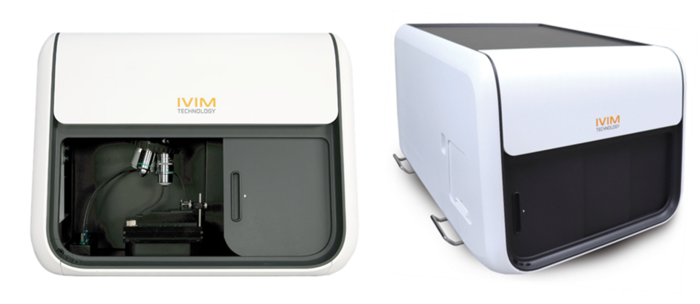
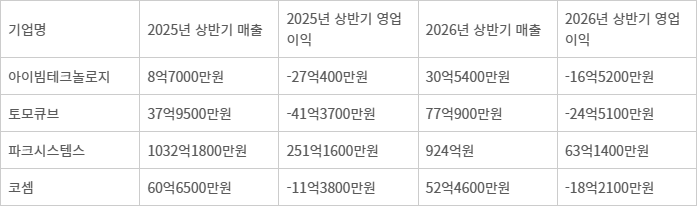
Intravital microscopy specialist IVIM Technology reported first-half revenue of 3.054 billion KRW and an operating loss of 1.652 billion KRW. The company generated roughly 70% of its full-year 2025 revenue of 4.375 billion KRW during the first half, while its operating loss narrowed by nearly 40% from a year earlier.
Founded by faculty members at the Korea Advanced Institute of Science and Technology (KAIST), IVIM Technology develops technology that captures living tissue not as static images but as high-resolution video, enabling real-time tracking of dynamic changes at the cellular level.
The company has supplied its microscopy systems to South Korean research institutions including the Institute for Basic Science (IBS), the Korea Institute of Toxicology (KIT) and Seoul National University, as well as overseas customers such as Sanofi, Harvard University and Italy's Chiesi Pharmaceuticals.
IVIM Technology attributed its revenue growth to a broader customer base, expanding beyond academia into the pharmaceutical and biotechnology sectors.
“Sales are typically weighted toward the second half, so if the current trend continues, we expect to set a record high for annual performance,” a company representative said. “We have also recently signed distribution agreements in Vietnam and Indonesia, where biomedical research and healthcare infrastructure are growing rapidly.”
Tomocube, which creates three-dimensional images of living cells, reported first-half revenue of 7.709 billion KRW, more than double the 3.795 billion KRW recorded in the same period last year.
Tomocube's core strength is holotomography, which uses differences in the refractive index of light to visualize structures such as mitochondria and cell nuclei in three dimensions. The technology enables detailed analysis of biological tissue and can be used for organoids, which are gaining attention as alternatives to animal testing.
After turning profitable in the fourth quarter of last year, Tomocube expects to report a full-year profit this year. The company is also preparing to enter semiconductor and display markets, believing its refractive-index calculation technology can be applied to glass substrates.
Park Systems, which has developed semiconductor metrology equipment based on atomic force microscopy, reported first-half revenue of 92.4 billion KRW, down 10.4% year on year. Revenue rose in the second quarter, however, and its order backlog stood at 112.5 billion KRW at the end of the first half.
Scanning electron microscope maker Coxem reported first-half revenue of 5.2 billion KRW, down 13.4% from a year earlier because of weak overseas sales. The company is seeking a rebound by shifting from a distributor-based sales model to original design manufacturing, or ODM.
Industry observers expect domestic research-equipment companies with core technologies to expand as competition intensifies worldwide in advanced industrial technologies.
According to Global Market Insights, the global research-equipment market is expected to grow at a compound annual rate of 5.9%, from USD 25.2 billion this year to USD 42.3 billion in 2035.
South Korea's Ministry of Science and ICT reported that the number of domestic research-industry companies reached 21,007 in 2024, surpassing 20,000 for the first time. Combined revenue for the sector rose 3.6% year on year to 28.6 trillion KRW.
