






Chinese display makers are using profits from their dominant LCD businesses to finance loss-making OLED investments, narrowing the gap with South Korean panel makers, according to market research firm Omdia.
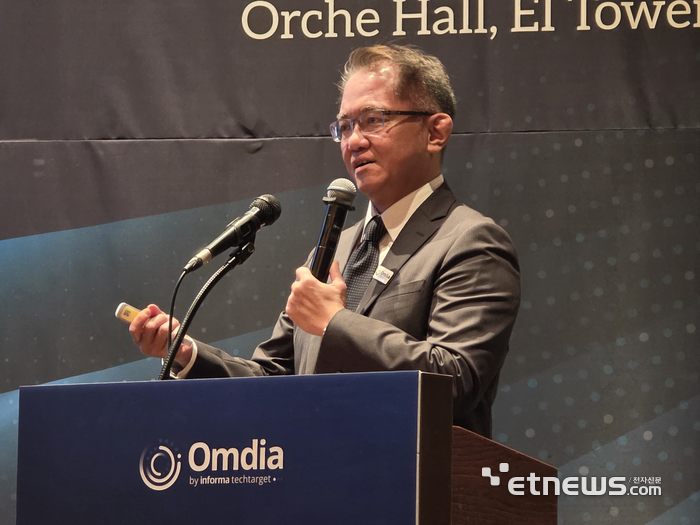
Speaking at Omdia's Korea Display Conference in Seoul on Sep. 3, David Hsieh, a senior director at Omdia, said OLED remains a “cash-burning business” for Chinese panel makers.
“They are using substantial profits and cash generated by LCD to offset OLED losses while continuing aggressive investment, including in Gen 8.6 OLED production for IT applications,” Hsieh said.
The strategy allows Chinese companies to treat LCD as a cash cow while pursuing low-price competition and rapid capacity expansion in OLED panels for smartphones and IT devices. That is increasing pressure on Samsung Display and LG Display.
Chinese suppliers including BOE and China Star Optoelectronics Technology, or CSOT, now account for about 80% of global LCD production capacity. They are effectively controlling the market by strategically maintaining average fab utilization at around 82%, helping stabilize panel prices.
As Taiwanese panel makers have exited or restructured their LCD businesses, Chinese manufacturers have secured strong LCD profitability and steady cash flow.
However, major Chinese OLED producers—including BOE, CSOT, Visionox and Tianma—continue to report significant losses in their OLED operations.
“The only reason Chinese companies can keep pursuing OLED is that they are making substantial money from LCD right now,” Hsieh said.
According to Omdia, OLED's share of total display revenue is projected to rise from 39% in 2025 to more than 45% by 2032. Over the same period, LCD's share is expected to decline from 60% to 54%.
OLED is effectively the display industry's only major growth segment, prompting Chinese panel makers to accept near-term losses while investing aggressively in future capacity.
Omdia expects the current production-capacity gap between South Korea and China in OLED panels for mobile PCs—currently estimated at roughly 70% to 30% in South Korea's favor—to narrow over time.
For Gen 8.6 OLED capacity, China is expected to take the lead by 2028, with an estimated 80% share compared with 20% for South Korea.
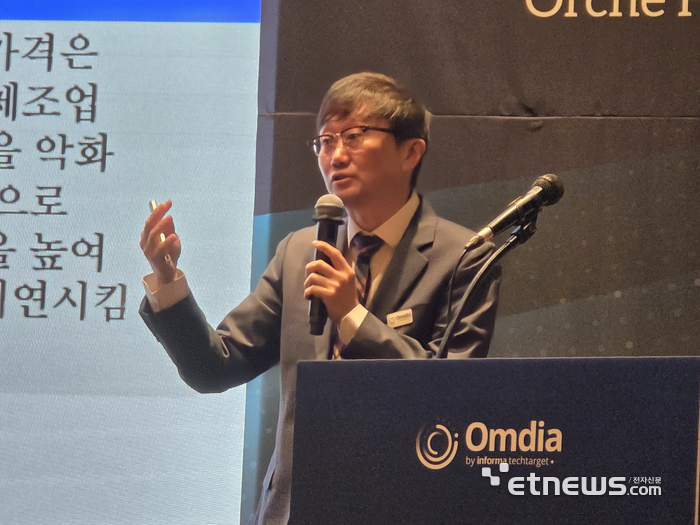
Park Jin-han, a director at Omdia, said Chinese smartphone OLED capacity has risen to a level comparable with South Korea's. However, he noted that South Korean suppliers still dominate the higher-margin premium segment.
“That remains encouraging,” Park said. “As OLED expands, South Korean companies are expected to continue generating profits and sustaining their businesses.”