








The White House and leading AI executives have agreed to leave oversight of AI safety largely in companies' hands, even as calls grow to slow the pace of development.
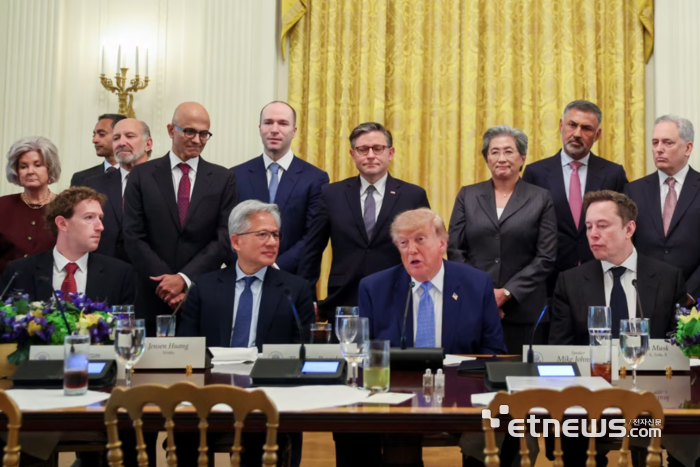
According to The Wall Street Journal, Bloomberg and other news outlets, U.S. President Donald Trump discussed the approach at a September 29 lunch with House Speaker Mike Johnson and executives from major AI and technology companies.
The talks focused on AI safety and regulation amid mounting concern over the risks of rapid technological advances. They reaffirmed a preference for corporate self-regulation rather than tighter legal restrictions.
Attendees included Meta CEO Mark Zuckerberg, Anthropic CEO Dario Amodei, Google CEO Sundar Pichai, Nvidia CEO Jensen Huang, Microsoft CEO Satya Nadella, Tesla and SpaceX CEO Elon Musk, Amazon founder Jeff Bezos, AMD CEO Lisa Su, and OpenAI President Greg Brockman.
The companies agreed on principles for managing AI safety themselves. Johnson said the participating companies had signed an “accord” on AI technology standards. Neither the full text nor the specific technical requirements were released, but the voluntary agreement was likened to a constitution carrying moral rather than legal force.
“In some ways, it's like a constitution,” Trump said. “The most important people in the world signed it, and I signed it as president. This is, in effect, a safeguard.” He added that he was considering a committee of about 10 people to oversee the entire AI industry.
Details of the proposed committee's membership and authority were not disclosed, leaving open how it might support substantial self-regulation within companies. Trump also suggested that some executives at the lunch could be appointed to the panel.
The discussions also outlined an approach in which internal controls would be audited for effectiveness and overseen at the board level. Zuckerberg said the companies had agreed to build strong internal safeguards into their AI systems.
Trump maintained his opposition to sweeping federal regulations that would curb AI development itself. He said existing laws and agencies, including the Justice Department and the FBI, could address misuse and criminal activity without holding back technological progress. He also expressed opposition to agreements with China on AI governance.
The accord appears to represent a compromise between the White House and the industry as concerns about safety and the possibility of losing control of advanced AI increasingly emerge from within AI companies themselves. Rather than having the government directly limit the pace of development, the two sides found common ground in a self-regulatory model centered on stronger corporate controls.
Anthropic, OpenAI and other leading AI companies have previously emphasized the need for government-established safety standards. The Trump administration, however, has warned that regulation could put the United States at a disadvantage in its competition with China.
