








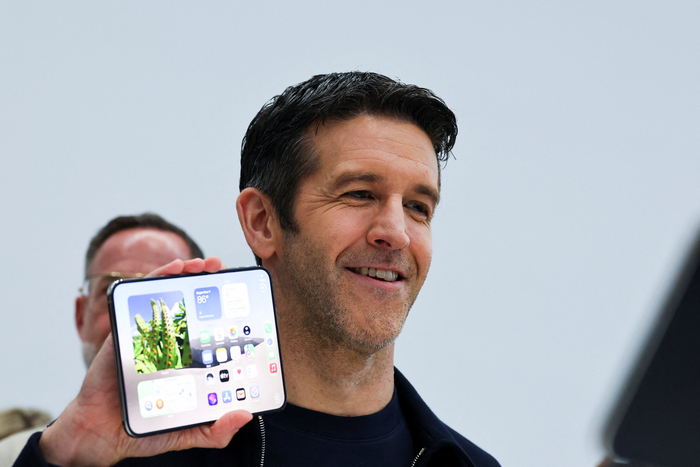
Apple is expected to postpone the adoption of two advanced display technologies—Color Filter on Encapsulation, or COE, and Low-Temperature Polycrystalline Oxide Plus, or LTPO+—that had been under consideration for its 20th-anniversary iPhone next year.
The decision appears to reflect both slower-than-expected technology maturation and rising iPhone production costs amid surging memory prices, often described in the industry as “chipflation.” Adding costly display technologies at this stage would further increase the device's bill of materials.
According to industry sources, Apple is delaying some of the display upgrades previously planned for the anniversary model. The company is still expected to move forward with a four-sided bending display, but COE and LTPO+ are not expected to be used in the 20th-anniversary iPhone. No revised timeline for their adoption has been set.
Four-sided bending is designed to create a near-borderless, full-screen appearance by curving the display around all four edges of the smartphone.
COE integrates the polarizer into the display panel itself, improving display efficiency and allowing for a thinner panel structure. LTPO+ is an evolution of low-temperature polycrystalline oxide technology that replaces LTPO driving transistors with oxide transistors. The approach is intended to reduce the number of excimer laser annealing, or ELA, process steps while improving power efficiency.
Apple had been preparing the technologies with South Korean panel makers Samsung Display and LG Display as part of development work for the iPhone's 20th anniversary. The company previously used the iPhone's 10th anniversary in 2017 to introduce the iPhone X, which brought major changes including the iPhone's first OLED display, the removal of the physical Home button and the introduction of Face ID.
Samsung Display and LG Display have been strengthening production capacity and investing in new equipment in anticipation of future adoption of these technologies. In June 2025, LG Display announced a KRW 1.26 trillion investment package, including KRW 700 billion for panel-line upgrades at its Paju facility and KRW 560 billion for module-line investments in Vietnam. In April this year, the company also announced a further KRW 1.1 trillion in facility investment and began placing equipment orders.
Industry sources see two major reasons for Apple's apparent change in plans. First, memory-price inflation is already pushing up iPhone manufacturing costs, making it harder to absorb additional costs from new display technologies. Second, Apple is believed to be seeking more advanced performance than current COE and LTPO technologies can deliver, while materials and process technologies may not yet meet its required level of maturity.
The delay could postpone opportunities for Samsung Display and LG Display to supply higher-value panels, despite their ongoing capacity investments.
“Delaying the adoption of new display technologies would push back panel makers' opportunities to supply high-value-added products,” an industry source said. “It is unlikely to be welcome news for companies that have already begun investing in related equipment.”
