





Major Overhaul of National Standards
Strengthening Technology and Quality Competitiveness
Direct Challenge to Samsung and LG
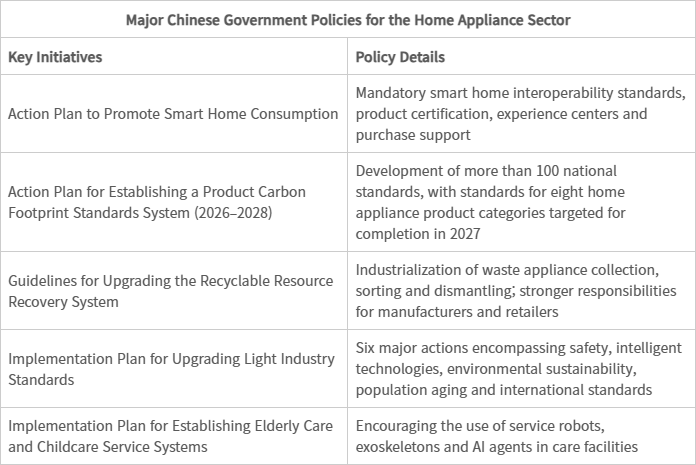
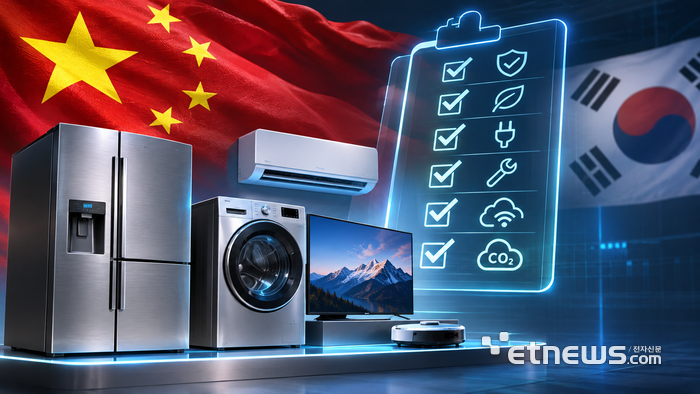
China is undertaking a major overhaul of its national standards system for the home appliance industry. The move is aimed at shifting away from its traditional reliance on low prices and mass production to secure comprehensive competitiveness encompassing technology, quality and services.
The initiative is seen as a strategy to directly challenge South Korean companies such as Samsung Electronics and LG Electronics in the global market by combining price competitiveness with competitive quality and services.
The Chinese government has been revising mandatory national standards and product-specific technical specifications for home appliances. Its objective extends beyond improving product quality in China's domestic market to expanding its influence over technology and quality standards recognized in global markets.
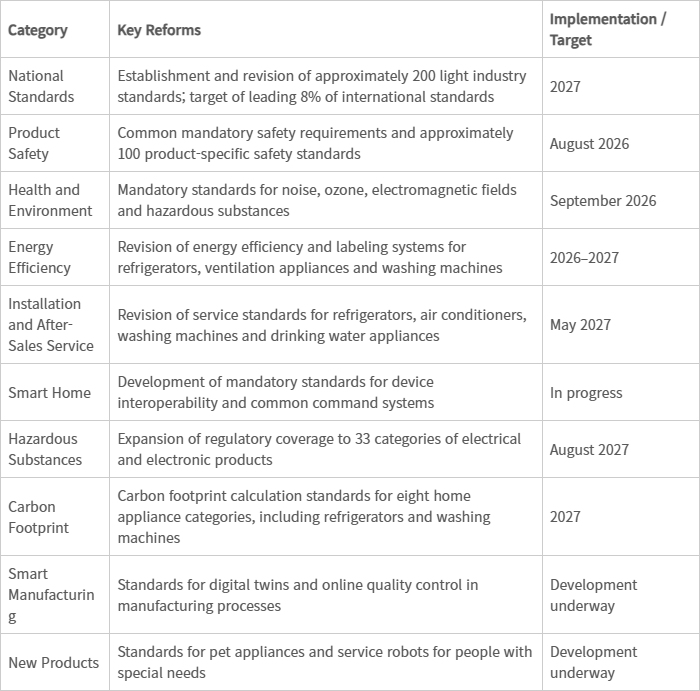
In September, eight Chinese government departments, including the Ministry of Commerce, announced an “Action Plan to Promote Smart Home Consumption” and decided to pursue the development of mandatory national standards to improve interoperability among smart home devices from different brands and manufacturers. The plan aims to enhance compatibility across the entire smart home industry by standardizing device network connectivity, common command systems and interdevice connection protocols.
Earlier in August, China implemented common mandatory national standards for the electrical safety of household appliances. It also introduced approximately 100 product-specific safety standards covering various product categories, including refrigerators, washing machines and air conditioners.
China is also establishing national standards for after-sales service. Last month, it began specifying product-specific service procedures and requirements for service providers across four product categories: refrigerators, air conditioners, washing machines and drinking water appliances.
The same applies to smart home products.
Moving beyond its consumer goods trade-in policy, China is now undertaking a comprehensive overhaul of the entire home appliance industry, from product design and manufacturing to sales, installation, after-sales service and product collection. In addition to improving the performance of existing appliances, China is revising common rules that manufacturers, component suppliers and service providers must follow.
The impact on the industry will not be limited to China's domestic market. Chinese appliance manufacturers such as Haier, Midea, Hisense and TCL have already expanded their presence in global markets by leveraging competitive pricing and production scale. More recently, they have broadened their premium TV and home appliance lineups while strengthening their overseas manufacturing bases and sales networks. If improvements to national standards translate into stronger quality and service competitiveness, competition with South Korean companies will inevitably intensify.
“If China secures competitiveness not only in the low- and midrange segments but also in premium products and services, Samsung Electronics and LG Electronics may find it increasingly difficult to maintain profitability simply by increasing the proportion of high-end products,” a home appliance industry official said.
“The most important challenge will be to expand revenue streams in new areas, including subscriptions, services and business-to-business (B2B) operations such as heating, ventilation and air conditioning (HVAC), while maintaining the competitiveness of finished products,” the official added.
