








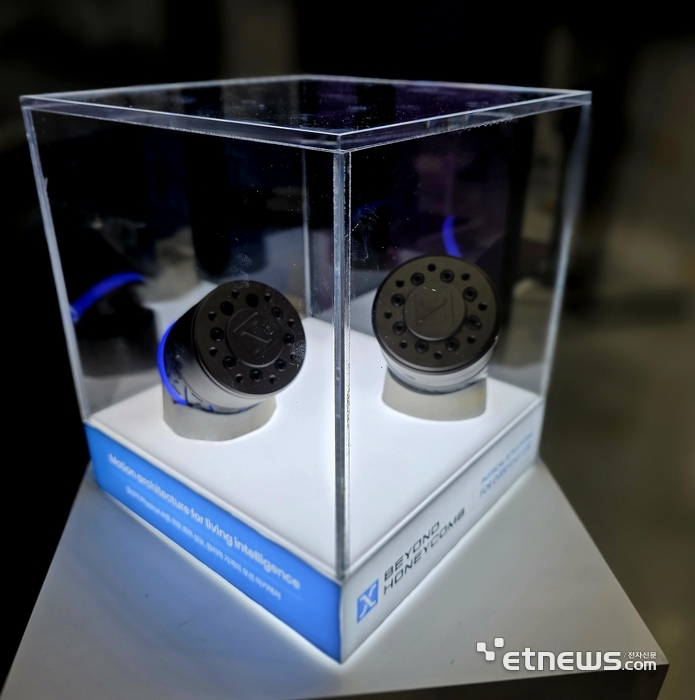
AI-powered cooking robot startup Beyond Honeycomb plans to begin mass-producing a new robotic drive module in the first half of next year, aiming to sharply cut the cost of commercial cooking robots and accelerate the rollout of its physical AI platform.
Priced in the $100 range (around 150,000 KRW), the module is roughly 20 times cheaper than conventional industrial robot actuators, which typically cost about $1,300 (around 2 million KRW) per unit. By bringing sensors, AI and actuators entirely in-house, the company says it can dramatically lower hardware costs and expand deployments.
“We are scheduling the initial production run of our actuators for the first half of next year,” Beyond Honeycomb CEO Justin Jung (Hyun-ki Jung) said on June 21. “We will start with a pilot run of a few hundred to a few thousand units for rigorous testing. Once the production system is fully stabilized, we will scale up to full mass production.”
Founded in 2020, Beyond Honeycomb specializes in AI-driven culinary robotics. Its flagship product, GRILL X, is a commercial kitchen solution that automates the grilling of pork, beef and fish. The system uses real-time sensors to monitor food texture and doneness, while an AI core dynamically controls the robot's movements.
Actuators serve as the core drive joints that enable robotic movement. Beyond Honeycomb's new module targets the 40-60 Nm torque class with a 3 kg payload capacity--specifications that are in high demand for commercial and service robots.
Jung said the company re-engineered the hardware specifically for physical AI applications, allowing it to slash prices by about 95% compared to heavy-duty industrial actuators. “Traditional actuators were designed to ensure rigid, ultra-precise repetitive movements for heavy industrial arms,” he explained. “Before the advent of AI, hardware had to be engineered to be heavy, expensive and mechanically precise by default. However, in the era of physical AI, true optimization happens when software intelligence, physics engines and hardware operate in tandem.”
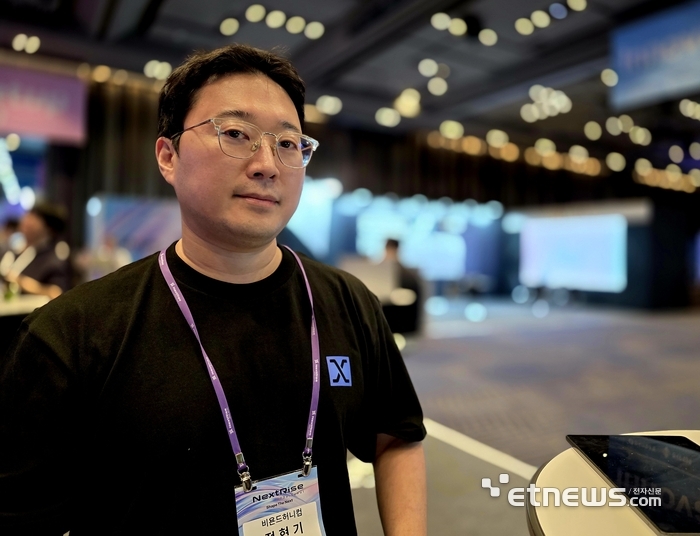
This is not the company's first success in radical cost reduction. Beyond Honeycomb previously developed its own proprietary hyperspectral sensor to analyze food readiness. While low-end commercial spectral sensors traditionally retail for around $20,000 (about 30 million KRW) and standard models exceed $33,000 (around 50 million KRW), the startup initially cut costs to roughly $400 (about 600,000 KRW) and has since reduced that further to the $100 range.
To date, the company has deployed around 300 cooking robots across commercial kitchens and expects total installations to surpass 500 units by the end of this year. These field units are actively collecting data on cooking conditions and flavor consistency. With its next-generation models, Beyond Honeycomb plans to start capturing human behavioral data in the kitchen as well.
Looking ahead, the startup has already begun R&D on a consumer platform, with the goal of unveiling its first home-oriented product in the first half of next year. Beyond Honeycomb is betting that smaller, affordable, task-specific physical AI solutions--designed for cooking, dishwashing or cleaning--will enter households much faster than expensive, full-scale humanoid robots.
“While humanoid robots certainly have their place, deploying massive humanoids into domestic spaces for cooking or daily chores will take considerable time,” Jung said. “By controlling our entire stack--sensors, AI and actuators--our ultimate goal is to make physical AI accessible and affordable for everyone in their daily lives.”
