






South Korean robotics component makers are stepping up their push into the North American robotics supply chain, aiming to capitalize on rising demand for key drive components such as reducers and actuators. The move comes as U.S. lawmakers weigh new national security restrictions targeting Chinese-made robots and parts, creating fresh demand for non-Chinese supply chain alternatives.
On June 22, 14 South Korean robotics and automation companies, including nine firms participating in a joint pavilion organized by the Korea Institute for Robot Industry Advancement (KIRIA), began showcasing their technologies at AUTOMATE 2026, North America's largest robotics and automation trade show.
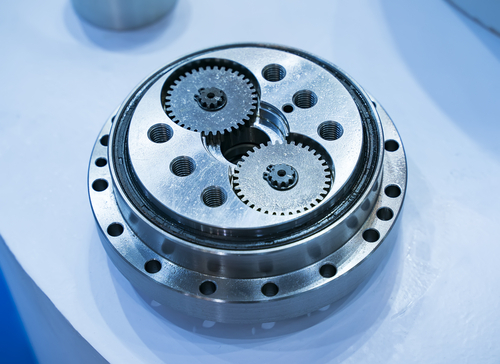
The expansion by South Korean component makers is drawing close industry attention. Drive-system parts such as precision reducers and actuators are critical to torque transmission and precise positioning in robotic joints, including those used in humanoid robots. Because these components directly affect a robot's performance, winning early customers and building a track record in North America could provide an important springboard for future growth.
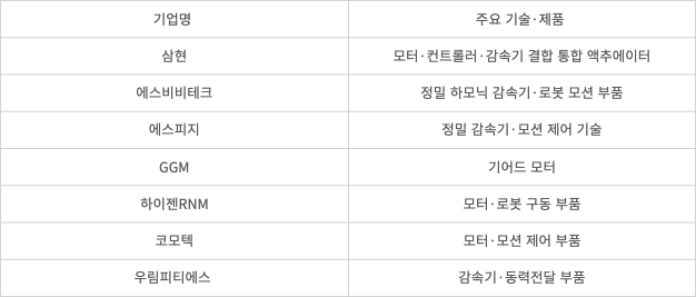
Companies including Samhyun, SBB Tech, and SPG are promoting advanced actuators, precision reducers, and motion-control technologies to attract buyers. Meanwhile, GGM, Higegen RNM, Komotek, and Woorim Powertrain Solutions are targeting North American automation customers with specialized motors and power-transmission components.
Geopolitical shifts in the U.S. robotics supply chain are strengthening the strategic importance of this push. In March, the U.S. Congress introduced the American Security Drone Act and related procurement restrictions aimed at preventing federal agencies from buying or operating Chinese-made robots. In June, lawmakers introduced the GUARD Act, which could give the U.S. government authority to block the domestic sale of robots deemed a national security threat.
Both measures are focused on limiting the use of Chinese-made robots in public procurement and, potentially, the broader commercial market. The regulatory drive reflects growing concern that modern robots, as highly connected systems integrating cameras, sensors, communication modules, and control software, could pose serious security risks to critical infrastructure.
Although the exact scope and final passage of these bills remain uncertain, industry insiders believe the shift will boost demand for alternative, non-Chinese robotics supply chains and create a strong opening for South Korean component makers seeking long-term North American customers.
“It is highly worth noting that the U.S. has begun viewing the robotics supply chain through the lens of national security,” an executive at one participating company said. “For South Korean companies with proven capabilities in core drive components like reducers and actuators, this is a prime opportunity to secure North American customers.”
Hosted by the Association for Advancing Automation (A3), AUTOMATE is North America's leading robotics and automation exhibition, taking place from June 22 to 25 in Chicago. The event features more than 1,000 global companies presenting smart manufacturing technologies, including advanced robotics, industrial AI, and machine vision.
Coinciding with the show, Doosan Robotics also unveiled PalletizHD+, its new industrial robot AI solution that integrates hardware, software, and user-facing applications.