








SK Telecom plans to build up to 15 gigawatts (GW) of AI data center capacity as part of its ambition to transform South Korea into an AI infrastructure hub for Asia by 2035. The rollout will begin in Ulsan before expanding across the country's southeastern and southwestern regions.
The company announced on Saturday that it will proactively expand domestic AI computing infrastructure as demand for AI model training and inference continues to surge.
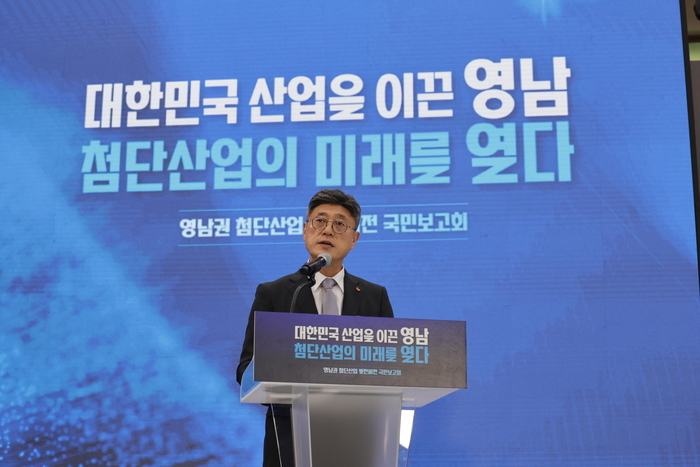
SK Telecom President Jeong Jae-heon unveiled the company's regional investment strategy during the National Vision Forum for Advanced Industry Development in the Yeongnam Region, outlining its long-term AI infrastructure roadmap.
The first phase centers on an AI data center currently under construction in Ulsan. SK Telecom plans to build an AI cluster exceeding 2GW across the Yeongnam region, followed by an additional 1GW in southwestern Korea. The company aims to gradually bring 5GW of AI data center capacity online from 2029 before expanding to 15GW by 2035.
SK Telecom said the project is driven by a growing global shortage of AI infrastructure. The company believes South Korea is well positioned thanks to its strengths in AI semiconductor components such as high-bandwidth memory (HBM), reliable nuclear and LNG-based power supplies, and extensive experience operating large-scale semiconductor facilities.
Within the SK Group, affiliates will contribute expertise in semiconductors, energy solutions, and construction, while SK Telecom will oversee the overall design, development, and operation of the AI infrastructure. The company has also expanded partnerships with Amazon Web Services (AWS) and Nvidia.
In Ulsan, SK Telecom and AWS are building a hyperscale AI data center scheduled to begin operations in the second half of 2027, with plans to eventually expand the facility beyond 1GW. The company recently also announced plans with Nvidia to develop next-generation AI data centers known as AI factories.
SK Telecom views the initiative as a new national infrastructure project comparable to the Gyeongbu Expressway and the rollout of high-speed internet. It expects the investment to strengthen regional economies while establishing South Korea as a global AI infrastructure hub.
“This investment is intended to proactively prepare the computing infrastructure needed for the global AI ecosystem,” Jeong said. “We will work closely with the government, industry, and local communities to help position South Korea as Asia's leading AI infrastructure hub.”
