








LG Electronics is entering South Korea's emerging market for remotely controlled induction cooktops, following Samsung Electronics, with plans to test up to 200,000 units that can be controlled through a smartphone app.
LG Electronics received a regulatory exemption from the Ministry of Trade, Industry and Energy this month for a demonstration project involving remote control of induction electric ranges.
Under the exemption, LG will link Wi-Fi-enabled induction cooktops to its mobile app and test remote functions—including changing settings and switching the appliance off—using built-in temperature-probe sensors and safety algorithms. The exemption covers up to 200,000 units.
Under current Korean electrical-safety standards, induction cooktops are classified as appliances requiring continuous user supervision. That classification makes it difficult to obtain safety certification for remote-control functions because of the potential risk of accidents.
Samsung Electronics opened the domestic market for remotely controlled induction cooktops. After receiving regulatory sandbox approval in 2023, Samsung introduced SmartThings-based remote-control features in its 2024 Bespoke induction lineup.
The system alerts users when an active cooking zone is left on after they leave home, allowing them to switch off the cooktop or lock the appliance through the app.
LG has previously connected some induction models to its LG ThinQ app, allowing users to monitor appliance status and make limited adjustments to heat settings. However, it has not offered a function to remotely turn off the appliance.
New products developed under the exemption will use sensors to monitor cooking conditions, while algorithms determine whether safety requirements are met before allowing remote-control commands.
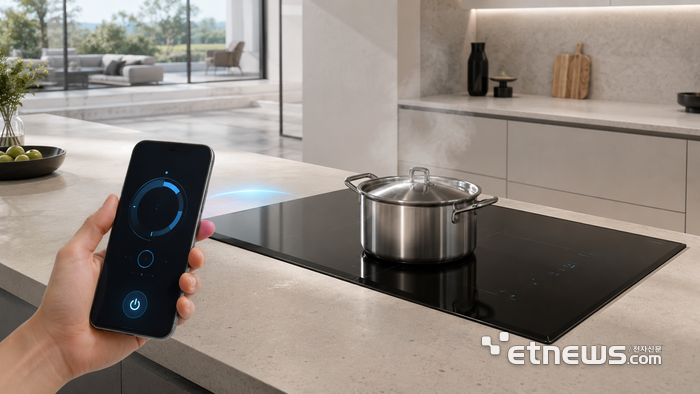
With LG joining Samsung, remote-control features are expected to become a new competitive battleground in South Korea's premium induction-cooktop market.
The government and testing agencies are developing preliminary safety standards and evaluation methods for remotely controlled induction cooktops based on Samsung's demonstration program. Once formal standards are introduced—potentially around next year—manufacturers will be able to launch remote-control models without limits on unit volumes or product models.
Global appliance makers have already sold induction cooktops with remote-control functions in overseas markets. Companies such as Thermador offer app-based features that let users adjust heat levels, manage cooking times and monitor appliance status.
South Korea's lack of relevant safety standards has made it difficult for manufacturers to introduce those global features unchanged in the domestic market.
LG's decision to seek a separate exemption rather than wait for formal safety standards is seen as an effort to secure time for product validation and gain an early foothold in the market.
As South Korea's electric-range market reaches maturity, companies are looking to remote-control features to stimulate premium replacement demand. Several smaller domestic appliance makers are also reportedly reviewing applications for similar regulatory exemptions.
“As the kitchen-appliance market matures, features such as remote control and integrated range hoods are becoming increasingly important,” an industry official said. “Smart-home competition will expand from connecting individual appliances to managing the kitchen as an integrated space.”
