








About 20 minutes by car from Rotterdam, a new residential development is taking shape in Rembrandtweg, Ridderkerk, an emerging housing district popular with urban professionals.
The project, being developed by housing corporation Wooncompas, comprises 102 social-rental apartments built largely with timber construction—still relatively uncommon in the Dutch construction sector. Timber buildings can reduce carbon emissions during construction while storing carbon over a longer period.
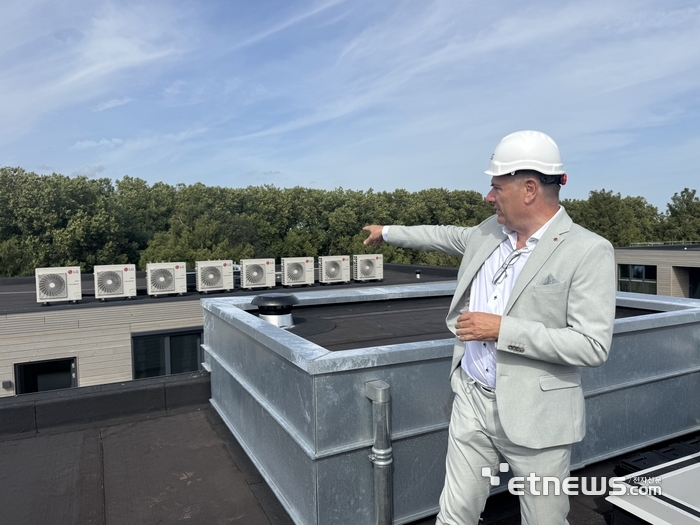
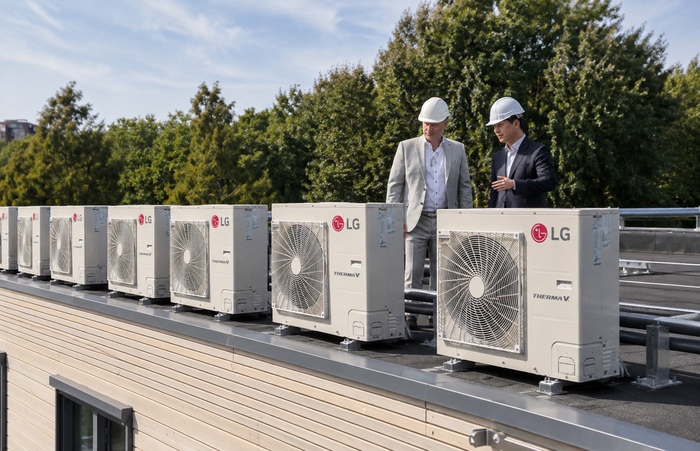
On the roof of the complex, LG Electronics has installed its Therma V air-source heat-pump system. Rather than burning fossil fuels, the system draws thermal energy from outdoor air and uses a refrigerant cycle to provide space heating, cooling and domestic hot water.
The system uses LG's proprietary high-efficiency inverter scroll compressor and can generate roughly four to five times as much thermal energy as the electricity it consumes. Compared with fossil-fuel boilers, it can reduce energy use by 40% to 60%, according to LG.
Therma V uses R32 refrigerant, which has a lower global warming potential than many older refrigerants, and is designed to operate reliably in temperatures as low as -15°C. Its noise level is 44 dB(A) at a distance of one meter, making it suitable for densely populated residential areas.
Inside each apartment is another key component: a stainless-steel buffer tank supplied by OSO, the premium water-heating solutions provider acquired by LG last year. The Ridderkerk project is LG's first case combining its heat-pump system and OSO buffer tank as an integrated package.
A buffer tank stores the heated water produced by a heat pump, maintains water temperature and stabilizes circulation throughout the building's heating system. When only one room continues to call for heat, the amount of circulating water can fall sharply, causing water temperatures to rise quickly.
The buffer tank helps absorb these temperature swings by cooling overheated water or warming cooler water. This reduces frequent start-stop cycling of the heat pump, lowering component wear, operating loads and unnecessary energy consumption. Its high-performance insulation and stainless-steel construction also help limit heat loss and corrosion risk.
“European customers are increasingly looking for integrated solutions that cover heating, cooling, hot-water production, thermal storage and system control,” said Robin Claus, head of ES Business at LG Electronics Benelux.
“LG's heat-pump reliability, built on our core-component technology, has been recognized in the market for years,” Claus said. “By combining diverse tank offerings with heat pumps, we aim to build new opportunities in the hot-water solutions market.”
The project comes as the Netherlands accelerates its shift away from natural gas. Under the country's energy and climate plans, more than 7 million homes and 1 million other buildings are expected to transition away from natural gas by 2050. New buildings, in principle, have not been allowed to receive natural-gas connections since July 2018.
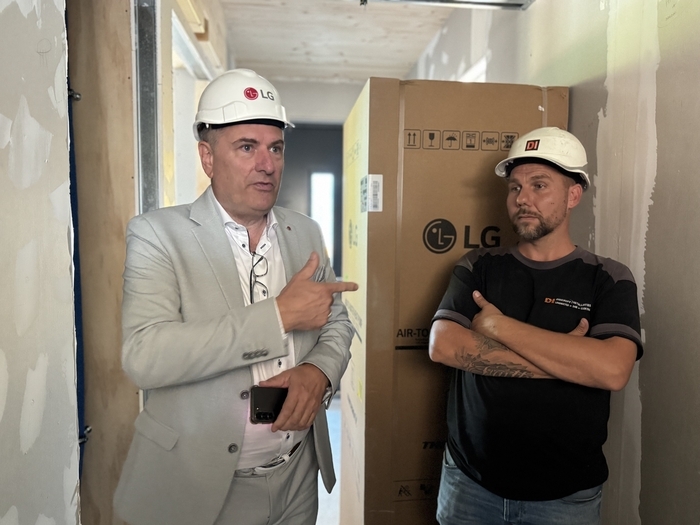
The Netherlands also faces a shortage of skilled installers and engineers. LG has operated its LG Academy program for more than a decade, offering free training and certification for installation technicians. The company says it has trained more than 10,000 specialists to date.
