




NVIDIA and the Korea Advanced Institute of Science and Technology (KAIST) plan to expand their joint AI lab's research team by the end of this year, accelerating work on next-generation AI technologies tailored to Korean industries.
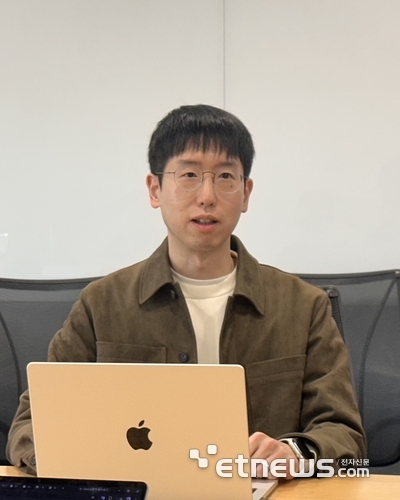
“One of the challenges facing Korea's AI ecosystem is that data-training know-how is not shared publicly but kept within individual companies,” said Kim Hyun-woo, director of the NVIDIA-KAIST Joint AI Lab, during a media interview at NVIDIA Korea's headquarters on Nov. 10.
To address that problem, Kim said the lab's central goal is to develop open datasets and training methods that anyone can use.
“Our research has two main tracks: generating better synthetic data and finding ways to learn more from the data we already have,” he explained.
The work could have applications across multiple industries, including semiconductors. By releasing datasets and training methods tailored to the Korean language and domestic industrial needs, the lab aims to help companies improve their own AI models.
“We believe the Korean-language and industry-specific data we release could also be used in the memory and semiconductor industries,” Kim said. “We also plan to analyze and compare differences across regions.”
He declined to elaborate on specific joint validation projects with Korean semiconductor companies or data center operators, saying discussions were still underway.
Asked how recent concerns over leadership risks at NVIDIA might affect the joint lab's operations, Kim said, “My goal as director is to complete our research projects without disruption.”
The lab, which launched in July, is recruiting researchers. It plans to hire an initial team of fewer than 10 researchers by year-end, then gradually expand its staff and computing infrastructure. Its first research results are scheduled for release in the second half of 2027.
The researchers will use NVIDIA's full AI technology stack, including its Nemotron family of open AI models, GPUs and software. The aim is to develop broadly applicable techniques for training AI with data, rather than methods tied to a particular model. These techniques are intended to work across a range of AI systems, including models developed independently in Korea.
The NVIDIA-KAIST partnership is valued at $300 million over an initial five-year period. That includes $250 million in AI computing resources, to be provided at a rate of $50 million annually. Researchers will access GPU infrastructure through NVIDIA Cloud Partners (NCPs) in Korea. The amount of hardware and how it will be provided remain under discussion.
“While previous industry-academic partnerships in Korea have focused relatively more on the domestic AI ecosystem, this joint lab is structured to enable direct collaboration with NVIDIA's global researchers,” Kim said. “It creates a global fast track for KAIST talent to make a direct impact on the worldwide AI research ecosystem.”
